
By Annette Lightheart, Master Gardener In-Training, SCMG
As gardeners, we often choose plants based on beauty, performance and what is readily available at local garden centres. Increasingly, however, many are beginning to ask a deeper question: What does my garden give back to the environment?
One of the most meaningful ways to support local ecosystems is by incorporating native plants into the landscape. Whether you have a large rural property or a small urban garden, native plants offer an opportunity to garden in a way that is both beautiful and ecologically supportive.
What Are Native Plants?
Native plants are species that occur naturally in a region and have evolved over time without human introduction, adapting to local climate, soil and ecological conditions. In Ontario, and more specifically Simcoe County, these plants are well adapted to our local climate, soil conditions and seasonal rhythms.
Over time, native plants have developed intricate relationships with native insects, birds and soil organisms. These relationships are essential. Native plants are not just individual species—they are part of a larger ecological web that supports life above and below the soil.
Supporting Pollinators and Wildlife
Native gardens are not just about flowers—grasses, shrubs and trees all play an important role in supporting wildlife and creating a balanced ecosystem.
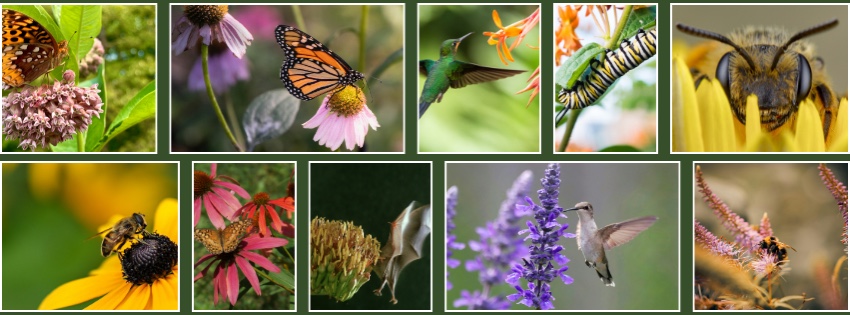
Many native insects—including bees, butterflies and moths—depend on specific plants for survival. These are known as host plants, and without them, certain species cannot reproduce.
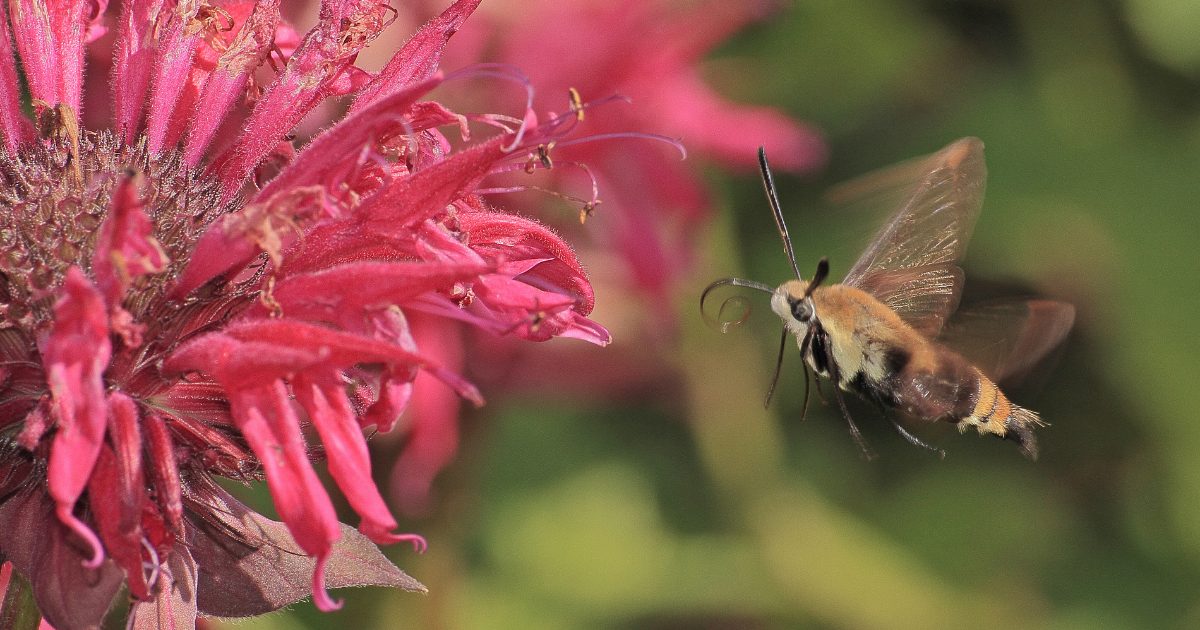
Some native plants serve as essential host plants for specific species, while others provide important nectar sources for a wide range of pollinators. For example, milkweed is required for monarch butterflies, while pearly everlasting supports the American Lady butterfly. Plants like wild bergamot (bee balm) attract a diversity of pollinators, including bees and butterflies, by providing rich nectar. Together, these relationships highlight how native plants offer not just food, but the conditions needed for pollinators to complete their life cycle.
Beyond butterflies, native plants provide:
- Nectar and pollen for bees and other pollinators
- Host plants for caterpillars, which provide an essential source of protein for birds, especially during nesting season
- Seeds and berries for birds and small mammals
Research has shown that landscapes dominated by non-native plants support far fewer insects, which in turn affects birds and other wildlife.
A garden filled with native plants becomes more than ornamental—it becomes habitat.
Resilience and Low Maintenance
Because native plants are adapted to local conditions, they tend to be more resilient once established.
They often require:
- Less supplemental watering
- Little to no fertilizer once established
- Reduced need for pest control and other inputs over time
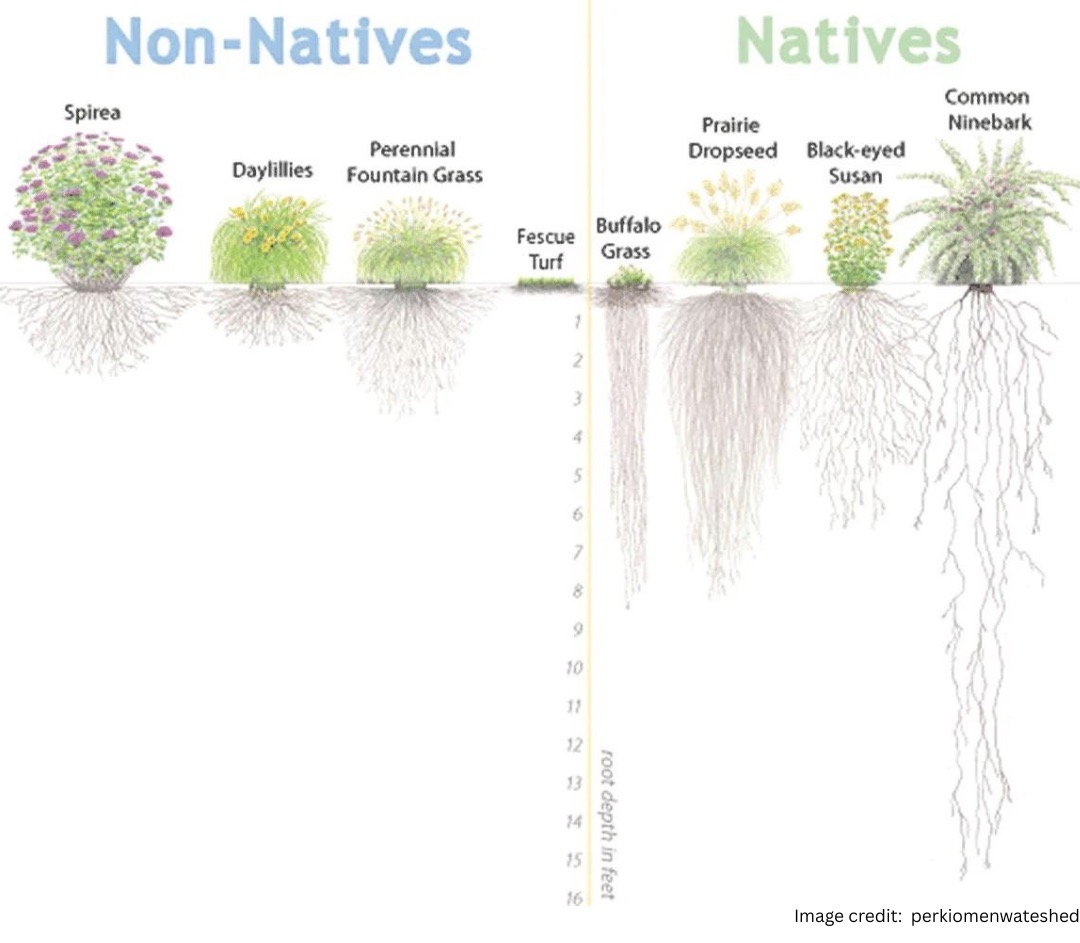
Many native species have deep root systems that:
- Improve soil structure
- Increase water infiltration
- Help stabilize soil and prevent erosion
These deep roots also allow plants to access moisture during dry periods, making them more drought-tolerant than many non-native species.
As the garden matures, this translates into a space that is easier to maintain, better able to withstand environmental stress, and often more cost-effective as well.
Environmental Benefits
Native plants contribute to the health of the broader ecosystem in several important ways:
Soil Health
Deep-rooted plants help build organic matter and support beneficial soil organisms, improving soil structure and fertility over time.
Water Management
Native plantings increase water infiltration and reduce runoff, helping to protect local waterways.
Carbon Storage
Healthy soils and perennial root systems can contribute to carbon storage, supporting climate resilience.
Biodiversity
By supporting a wide range of insects, birds and other wildlife, native plants help strengthen ecosystem diversity and stability.
Even small changes—such as replacing a portion of your garden with native species—can have a meaningful impact.
Beauty with Purpose
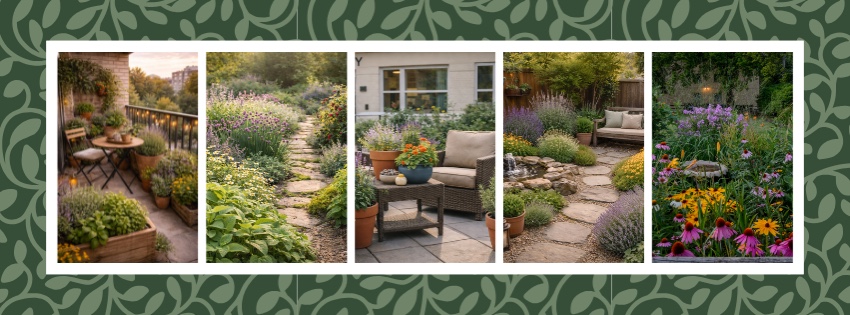
There is a common misconception that native gardens are less attractive or overly wild. In reality, native plants offer incredible diversity in colour, texture and seasonal interest.
From the vibrant blooms of black-eyed Susan (Rudbeckia hirta) and purple coneflower (Echinacea purpurea), to the graceful structure of native grasses and the striking height of fireweed (Chamerion angustifolium), native plants can be incorporated into a wide range of garden styles.
With thoughtful design, native plantings can feel both natural and intentional.
How to Get Started Growing Native Plants
Starting with native plants doesn’t require a complete garden overhaul. Small, intentional steps can make a big difference.
Start small.
Begin by adding a few native plants to an existing garden bed or replacing a portion of your lawn. Even a small pollinator patch can provide valuable habitat.
Choose the right plant for the right place.
Pay attention to sun, soil and moisture conditions, and select plants that naturally thrive in those environments. Looking at how plants grow together in natural areas can also help guide plant selection and create a more resilient garden.
Source plants thoughtfully.
In Simcoe County and surrounding areas, there are several reputable native plant nurseries to explore. Local seed-sharing events and plant exchanges are also a wonderful way to access plants while connecting with your community.
Prepare your space.
The importance of site preparation cannot be overstated. Taking the time to prepare your space well creates the foundation for a healthy, thriving pollinator garden.
Before planting, it’s important to remove existing vegetation, reduce weeds, clear plant debris and create a clean surface that allows for good seed-to-soil contact or space for transplants to establish.
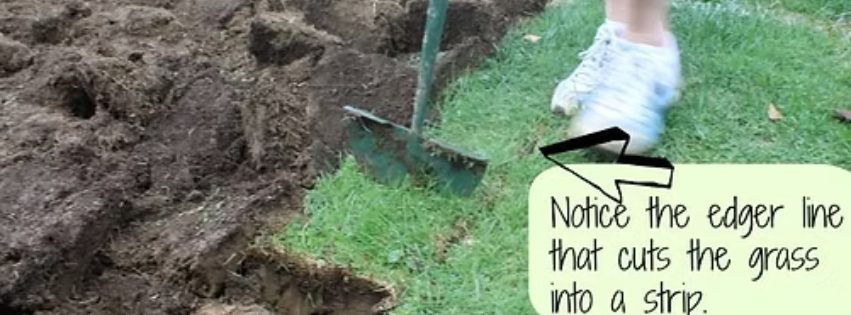
Rather than tilling or cultivating the soil, consider gentler, low-disturbance methods. Tilling can disrupt beneficial soil life, harm ground-nesting insects and bring buried weed seeds to the surface where they can quickly germinate. Over time, repeated cultivation can also weaken soil structure, increase erosion and contribute to the release of stored carbon.
One simple and effective approach is sheet mulching (sometimes referred to as smothering). This involves covering the area with cardboard or layers of newspaper, then topping it with compost, leaves or other organic materials. Gradually, this suppresses existing vegetation while allowing the materials to break down and enrich the soil.
For best results, allow the area to rest for a full growing season before planting, giving you a clean, well-prepared space for your wildflowers to establish.
Support establishment.
Even drought-tolerant native plants need regular watering during their first growing season while roots establish. After that, they typically require minimal care.
Be patient.
Native plants often spend their first year developing strong root systems. Over time, you’ll begin to see more growth, blooms and increased wildlife activity.
Embrace a natural look.
Native gardens may feel a little different at first. Allow for a more natural structure while maintaining simple edges or pathways to create a space that feels both intentional and alive.
Learn More Locally
To learn more about native plants in our region, consider connecting with the Simcoe County Master Gardeners, who offer valuable resources, guidance and local expertise to support your gardening journey.
A Shift in Perspective
Growing native plants invites us to see our gardens differently—not just as spaces we design, but as living systems we support.
By choosing plants that belong to the land, we begin to garden in partnership with nature. And in doing so, we create spaces that are not only beautiful, but resilient, abundant and alive.
References
Lady Bird Johnson Wildflower Center. (n.d). Why Native Plants
Ontario Nature. How to Grow Native Plants to Help Protect Pollinators.
David Suzuki Foundation. What Native Plants Attract Pollinators in Ontario?
Canadian Wildlife Federation, Scholtens, Peter. Why Grow Native Plants
North American Native Plant Society (NANPS) (n.d). How to Start Gardening with Native Plants
Blooming Boulevards. Site Preparation for Wildflower Pollinator Gardens
Images:
Image credit: Canva
Image Credit: Created by Annette Lightheart on Canva
Image Credit: Created by Annette Lightheart on Canva
Image credit: Blooming Boulevards


