 Simcoe County Master Gardeners
Grow Natives!
PLANT PROFILE
COMMON NAME: Red Maple
BINOMIAL: Acer Rubrum
| Family | Sapindaceae |
| Cdn Native Range | Native to eastern Canada from NL to MN; widespread throughout ON; common in both lowland and upland sites |
| Natural habitat | swamps, wetlands, lake edges, moist woods; also adaptable to upland forests and disturbed sites; highly versatile across soil moisture gradients |
| Type | deciduous broadleaf tree |
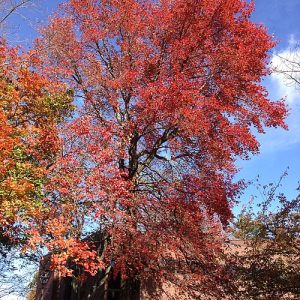
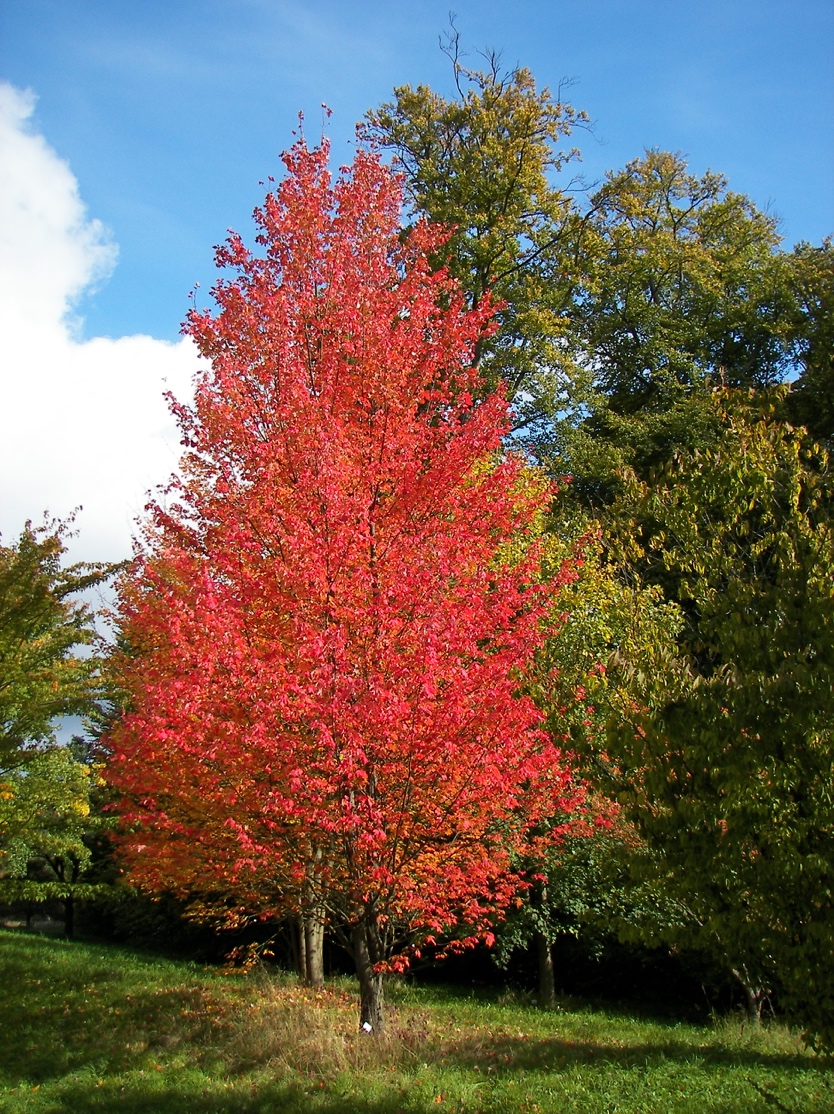
| Features | red flowers in early spring; red leaf stems (petioles); brilliant red fall colour (can range from yellow to orange to scarlet); smooth grey bark becoming ridged with age; winged samaras often reddish |
| Growth habit | upright, oval to rounded crown; often single trunk but may be multi-stemmed in wet sites; relatively fast-growing |
| Mature height | 12–20 m (40–65 ft) |
| Mature spread | 9–15 m (30–50 ft) |
| Life span | 100–150 years (occasionally longer in ideal conditions) |
| Cdn Hardiness Zone | 3–9 |
| Growing conditions | full sun to part shade |
| Soil conditions | adaptable – moist to wet soils preferred; tolerates clay, sand, and loam; tolerates periodic flooding; more tolerant of poorer and slightly compacted soils than sugar maple; prefers slightly acidic soils |
| Watering needs | moderate; appreciates consistent moisture; tolerant of temporary drought once established but performs best with regular moisture |
| Fertilizer needs | generally not required; benefits from organic mulch |
| Tolerance | wet soils; seasonal flooding; moderate salt tolerance; adaptable to urban conditions; moderate drought tolerance once established |
| Maintenance rank | low |
| Maintenance needs | if necessary, prune in late fall or winter (sap may bleed if pruned in early spring); remove weak branch unions if present when young |
| Bloom | small but showy red flowers in early spring before leaf-out |
| Fruit | paired winged samaras ripen in late spring to early summer |
| Pollinator support | valuable early nectar and pollen source for bees; host plant for numerous moth and butterfly species; seeds eaten by birds and small animals |
| Environmental support | important wetland and forest-edge species; provides wildlife cover and nesting habitat; stabilizes streambanks and wet soils; supports diverse insect populations |
| Garden Use | shade tree for medium to large properties; large rain gardens and wetter sites; restoration plantings; adaptable landscape specimen |
| Risks & Cautions | can develop weak branch angles leading to storm breakage; surface roots may appear in compacted soils; susceptible to leaf spot and verticillium wilt |
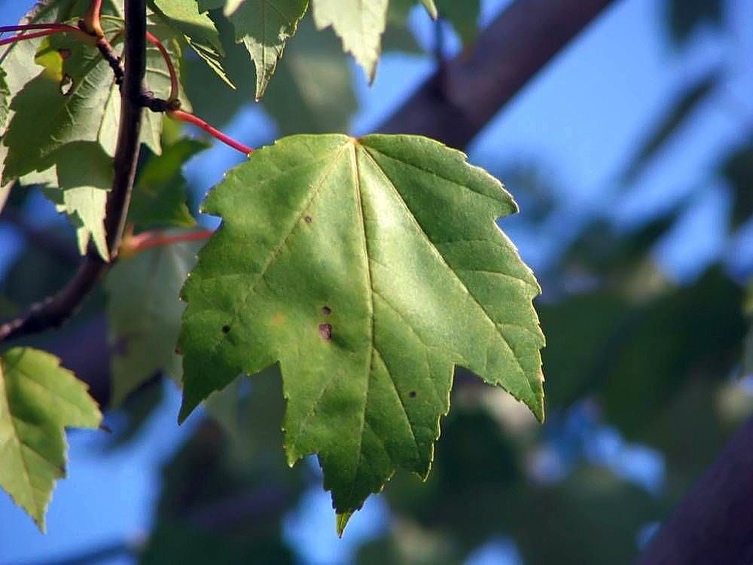
Photo Credits:
Red Maple – fall foliage (credit: Willow via Wikimedia Commons)
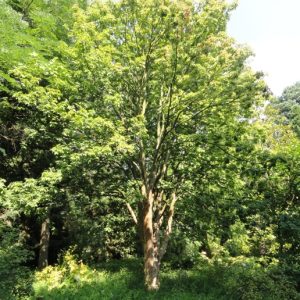
Acer rubrum – foliage (credit: David J. Stang via Wikimedia Commons)