 Simcoe County Master Gardeners
Grow Natives!
PLANT PROFILE
COMMON NAME: Hackberry
SCIENTIFIC NAME: Celtis occidentalis
| Family | Hemp |
| Cdn Native Range | all of QU, ON, MN |
| Natural habitat | rocky hills and sand dunes to bottomlands on a variety of soils including limestone and flood planes |
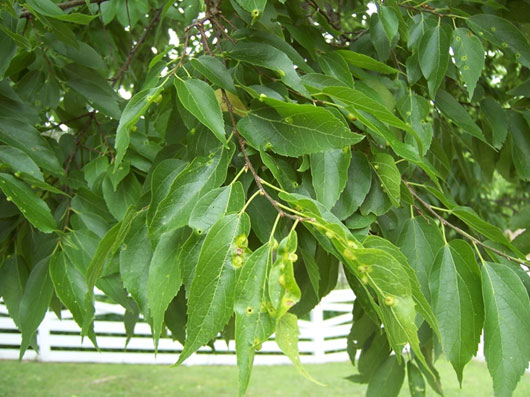
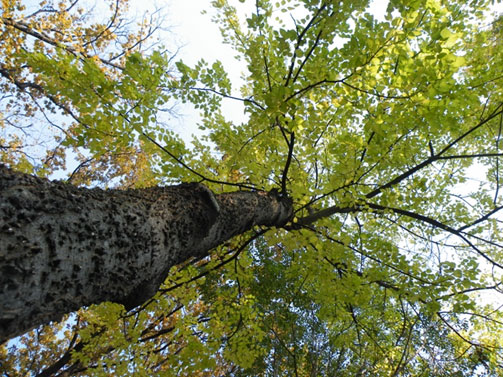
| Features | twigs sometimes twist into “witches’ brooms” at the ends of branches; yellow fall foliage is unremarkable; bumpy bark is unique |
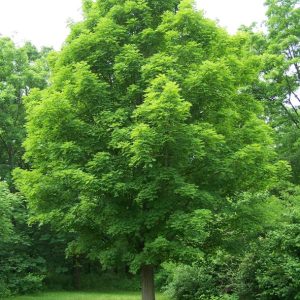
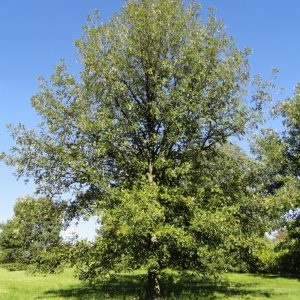
| Growth habit | fast-growing, versatile, unique corky bark and broad crown |
| Mature height | 10–15 m |
| Mature trunk width | 50 cm |
| Life span | 150–200 years |
| Cdn Hardiness Zone | 2–6 |
| Growing conditions | sun |
| Soil conditions | dryish average to moist |
| Watering needs | supplementary watering for the first 2–3 years |
| Tolerance | pollution, drought, compacted soil, road salt |
| Pruning needs | maintenance pruning is optional for structure and clearance; removal of witches’ broom is optional |
| Bloom | yellowish-green flowers bloom in mid-spring |
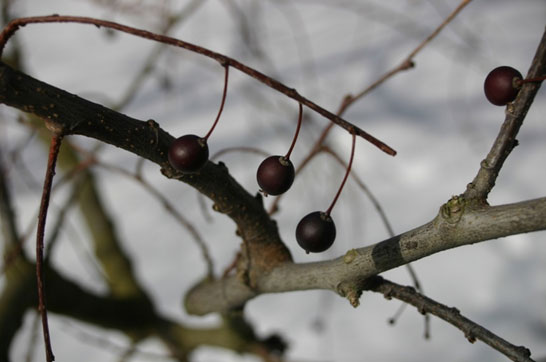
| Fruit | small reddish berry-like fruits turn purple when mature in the fall often persist over winter |
| Pollinator support | larval host for mourning cloak, question mark, eastern comma, hackberry emperor, tawny emperor and American snout butterflies, and a long list of moths including the ruddy dagger, thin-lined owlet, and banded tussock. |
| Environmental support | berries are an important food source for many species of wintering birds, game birds and small mammals. They are also edible for people. Nesting sites for songbirds. |
| Garden Use | roadside, boulevard, accent tree, ornamental, erosion control |
| Risks & Cautions | branch drop, root damage, fruit drop; pollen allergen source |
References: John Laird Farrar, Trees in Canada; Linda Kershaw, Trees of Ontario; Lorraine Johnson’s and Sheila Colla, A Garden for the Rusty-Patched Bumblebee; Heather Holm, Bees: An Identification and Native Plant Forage Guide.