 Simcoe County Master Gardeners
Grow Natives!
PLANT PROFILE
COMMON NAME: American Witch Hazel
BINOMIAL: Hamamelis virginiana
| Family | Hamamelidaceae (Witch hazel) |
| Cdn Native Range | Southern Ontario areas, especially Norfolk County, Quebec to Maritimes |
| Natural habitat | partial shade; moist sites; often in forests near flowering dogwood and oaks as understory tree |
| Type | deciduous small tree or large shrub |
| Features | only Canadian tree/shrub to bloom in autumn; simple, scalloped, alternate leaves are yellow in autumn; unique, crooked-branched crown adds winter interest |
| Growth habit | moderate growth rate; forms a dense, multi-stemmed, sprawling shrubby tree or spreading shrub with upright branching |
| Mature height | 4 – 8 m (10 – 20 ft) |
| Mature spread | 3 – 4.5m (12 – 15 ft) |
| Life span | 30 – 50 years |
| Cdn Hardiness Zone | 3 – 7 |
| Growing conditions | full sun to partial shade (blooms more in full sun) |
| Soil conditions | moist acidic well-drained soils |
| Watering needs | supplement 1 inch weekly during drought periods |
| Fertilizer needs | compost in spring and mulch over root zone |
| Tolerance | poor site conditions; wet soils; salt and air pollution; black walnut toxicity; deer |
| Maintenance rank | low |
| Maintenance needs | avoid extremely dry sites; prune only as necessary in early spring to maintain shape; remove suckers to prevent spreading |
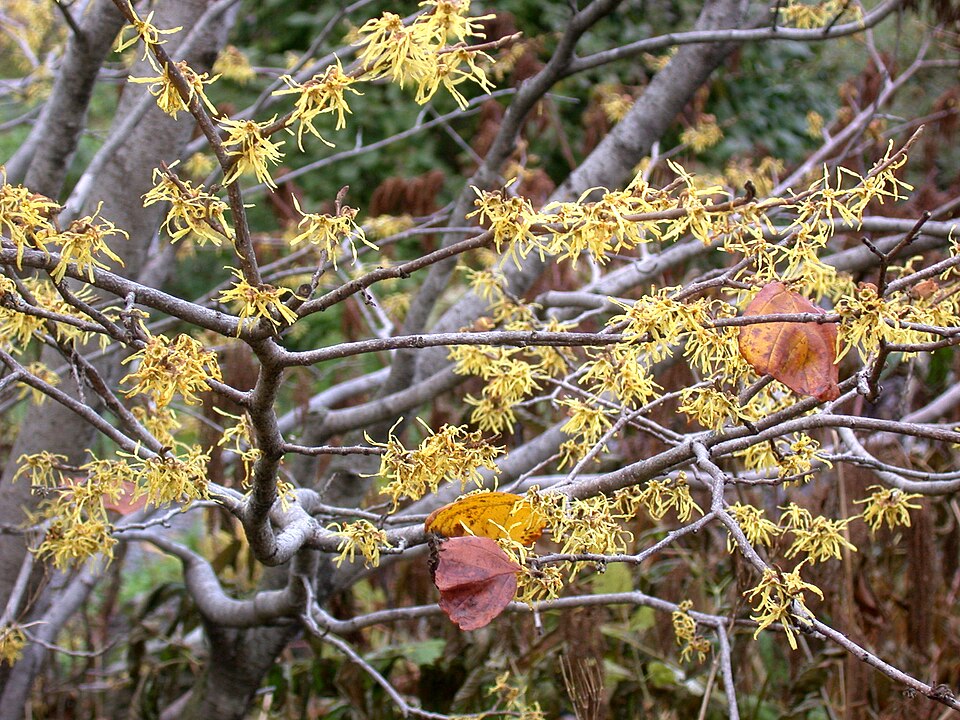
| Bloom | showy, fragrant bright yellow 1.5 – 2 cm long spidery blooms with 4 ribbon-shaped petals clustered in groups of three along twigs; appear from Oct – Dec |
| Fruit | small, woody ½-inch 2-beaked brown capsules mature over a year, contain 2 shiny black seeds; capsule tips shoot seeds up to 12 m from parent |
| Pollinator support | nectar and pollen source for bees; larval host of spring azure butterfly and many moth and butterfly species |
| Environmental support | fruit and seeds attract variety of birds including wild turkeys |
| Garden Use | popular choice for pollinator-friendly gardens; specimen plant; good for urban environments due to tolerances; naturalizes with other natives |
| Risks & Cautions | no significant disease or pest issues |
References: Kershaw, Linda, Trees of Ontario; Johnson Nurseries, www.jniplants.com
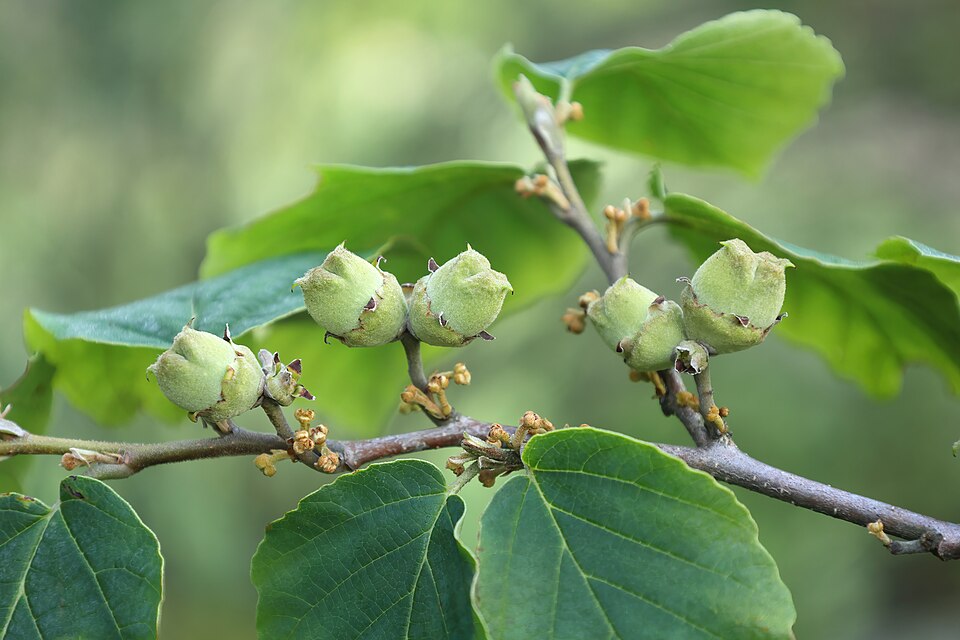
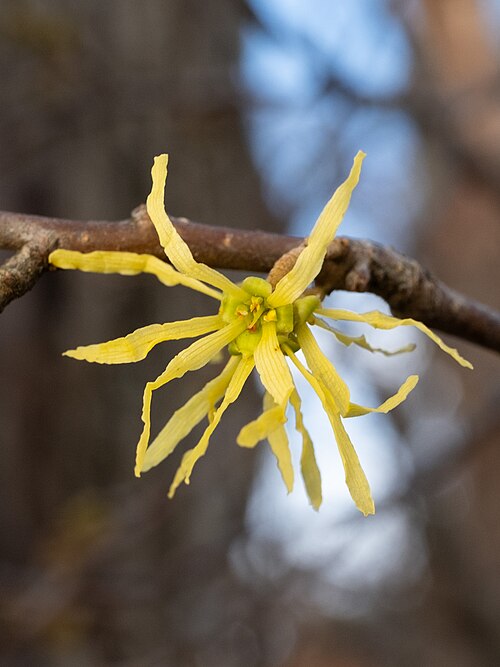
Photo Credits:
American Witch Hazel (credit: Alex Abair, CC BY 4.0 via Wikimedia Commons)
American Witch Hazel – Seeds (credit: Cephas, CC BY-SA 4.0 via Wikimedia Commons)
American Witch Hazel – Flower (credit: Alex Abair, CC BY 4.0)