
By Cathy Krar, Master Gardener
Yet another invasive insect is on our doorstep, pushing its way to our border at Niagara Falls. This time, it’s the Spotted Lanternfly (Lycorma delicatula) threatening fruit trees, vineyards, our wine industry, agricultural crops, and ornamental plants. If we have a clear idea what can happen, we may be able to effectively fight back.
So far there are no established Lanternfly populations in Canada, but in Pennsylvania and New York, they are trying a variety of methods to eradicate this menace.
There are 5 instar phases to the Lanternfly life cycle: Egg, larva, early- stage nymph, late-stage nymph, and adult. Egg masses vary in size but are quite noticeable as the female secretes a white waxy substance over 30 to 50 eggs. It resembles grey mud or cement when it dries.
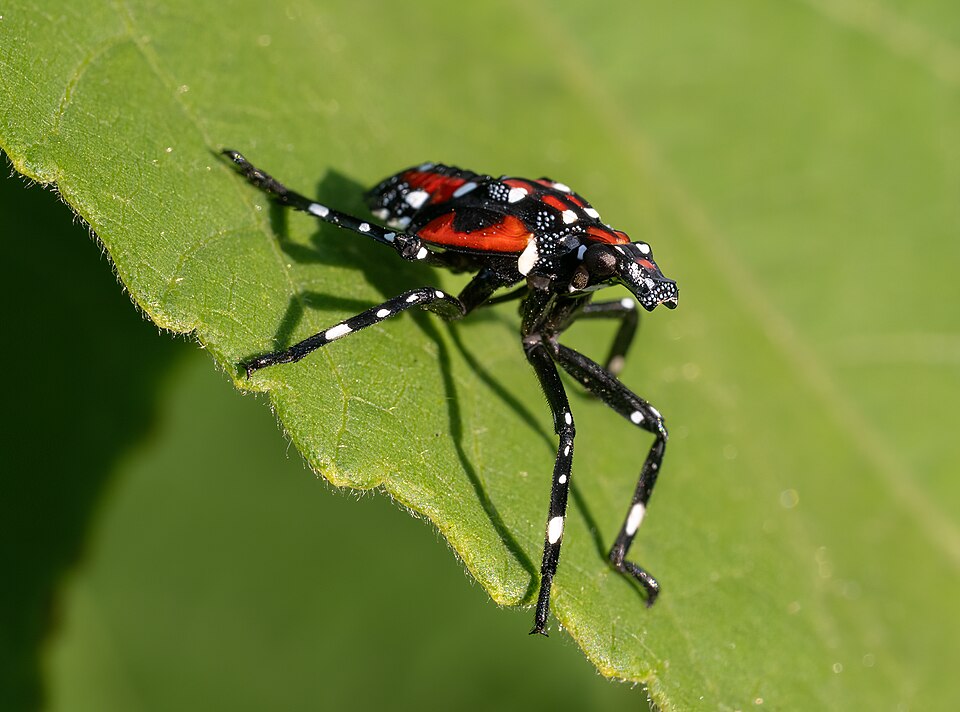
Spotted Lanternfly Nymph by Rhododendrities via Creative Commons
Lanternflies have piercing mouthpart that suck up sap, like feeding through a straw. They excrete a sugary waste that attract bees, wasps, and other insects, leaving behind a sooty mold and black coloured fungi at the base of trees. This causes stress to plants and trees, decreasing health and potentially killing them.
The adult lanternfly especially enjoys ‘Tree of Heaven’ trees (Alianthus), resulting in Alianthus populations needing to be cut down. They also attack maple, birch, willow, sycamore, staghorn sumac, and black walnut.
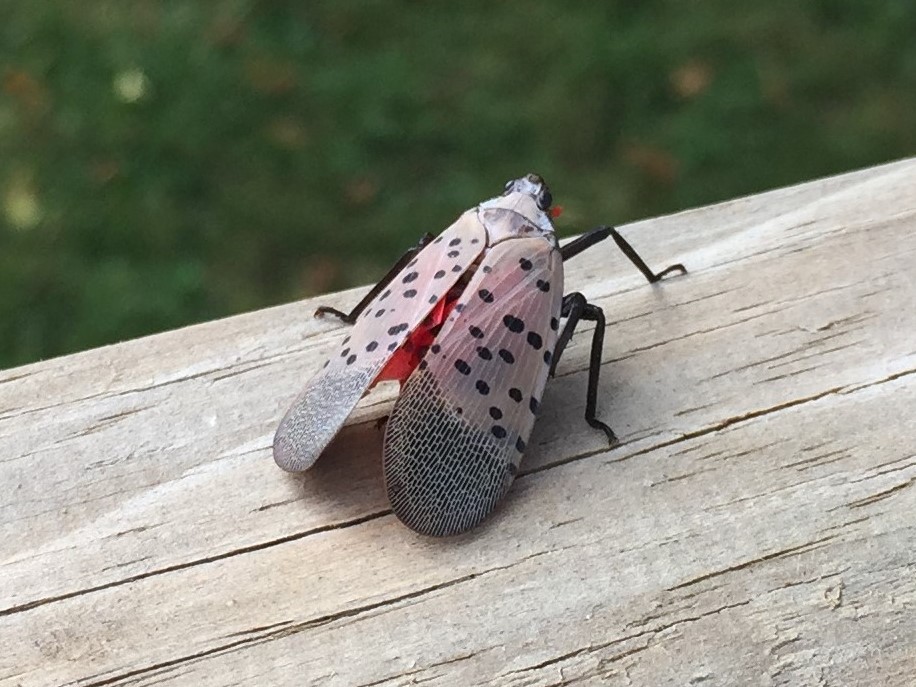
Adult Spotted Lanternfly by Walthery via Creative Commons
How to Combat These Insects?
An old plastic credit card could be used to scrape the egg masses from the trees into a bag or container with rubbing alcohol or hand sanitizer inside. A putty knife can be used to smash the nymphs and adults when you see them.
Our southern neighbours have resorted to approved insecticides to treat infected trees. They have tried sticky tape placed around tree trunks to trap nymphs that walk up the tree. However, sticky tape can prove problematic for our birds and beneficial insects too.
Home-made circle traps can be made by cutting plastic tops off milk containers, taping them together and attaching a mesh bag below. When tied to a tree, it creates a small tunnel that the adult lanternflies can walk into but cannot get out.
Lanternflies are planthoppers and they like to jump toward you. Another simple and effective way to catch them is to use container filled with soapy water. Use the lid to get the lanternflies to jump inside.
Please make use of hotlines that have now been set up to report any sightings (www.inspection.gc.ca/pests).
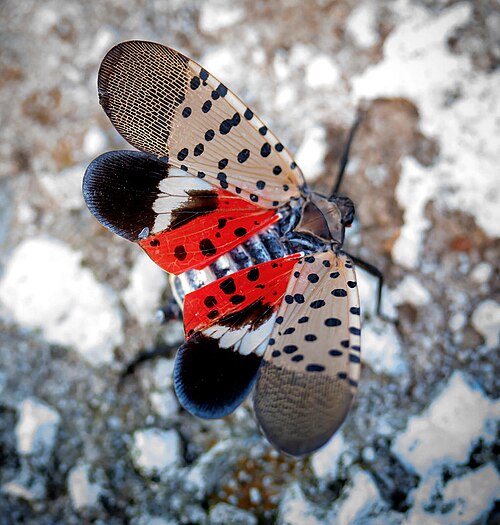
Featured Image: Spotted Lanternfly Displaying Underwing by Wandering Mogwaii via Wikimedia commons


