By Cathy Krar, Master Gardener
Your mother may have told you to stop thinking about sex, but if we don’t
pay attention to plant sex we are putting our very existence at risk.
Plant sex is necessary for fertilization, seed and fruit production. The
survival of plants is critical for healthy ecosystems because flowering plants
sequester carbon dioxide and produce oxygen. Climate change has put a
huge stress onto our ecosystem and a wide diversity of plants can help
manage these stresses. And finally, no plant sex, no plant food to feed our
growing population. Are you convinced that plant sex is worth our
attention?
But just what do we mean by ‘plant sex’? Well, we are talking about
pollination. The act of moving the little living pieces of yellow pollen dust
from the male anther in the flower to the female stigma of the same, or
another, flower.
Plants can’t move, so they need assistance to pollinate. Sometimes the
wind can move the pollen from one plant to another. This is typical for
many crop plants such as wheat, rice, corn and oats. But a large majority of
plants rely on insects, birds and animals (bats), for successful pollination,
and we need to ensure the survival of these helpers.
You will remember from high school biology that flowers produce nectar, a
food source for birds and insects. A bee lands on a flower in search of
nectar for her offspring. As the bee pushes into the flower to get to the
sweet nectar, the bee brushes up against the anthers that produce the
pollen of the plant and this pollen adheres to the legs and underside of the
bee. The bee then proceeds on to another nectar dive in another flower,
and this time the pollen brushes off onto the female stigma of this plant
thereby achieving fertilization. Plant reproduction, and life itself, is
dependent on that dust particle of pollen moving from one part of the flower
to another.
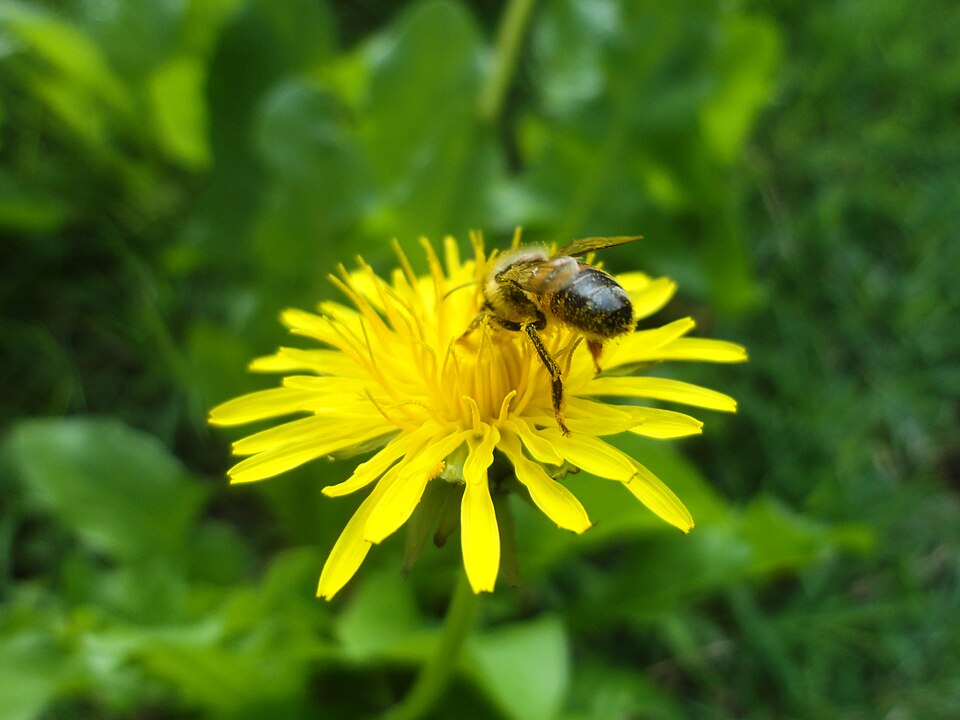
Pollination on Dandelion by Juan Carlos Mata via Creative Commons
Pollinator populations are trending downwards with the majority of those
being flies, beetles, butterflies, wasps and bees. These helpers need our
help to ensure that plant sex is happening.
Consider getting involved in pollinator activities in your community! Why
not plant a pollinator garden with a variety of native plants, a water source,
habitat for shelter and reproduction? How about increasing the survival rate of
pollinators by avoiding the use of pesticides in your own garden and reducing
your outdoor lighting? Protect and preserve the pollinators and you are
protecting the earth.
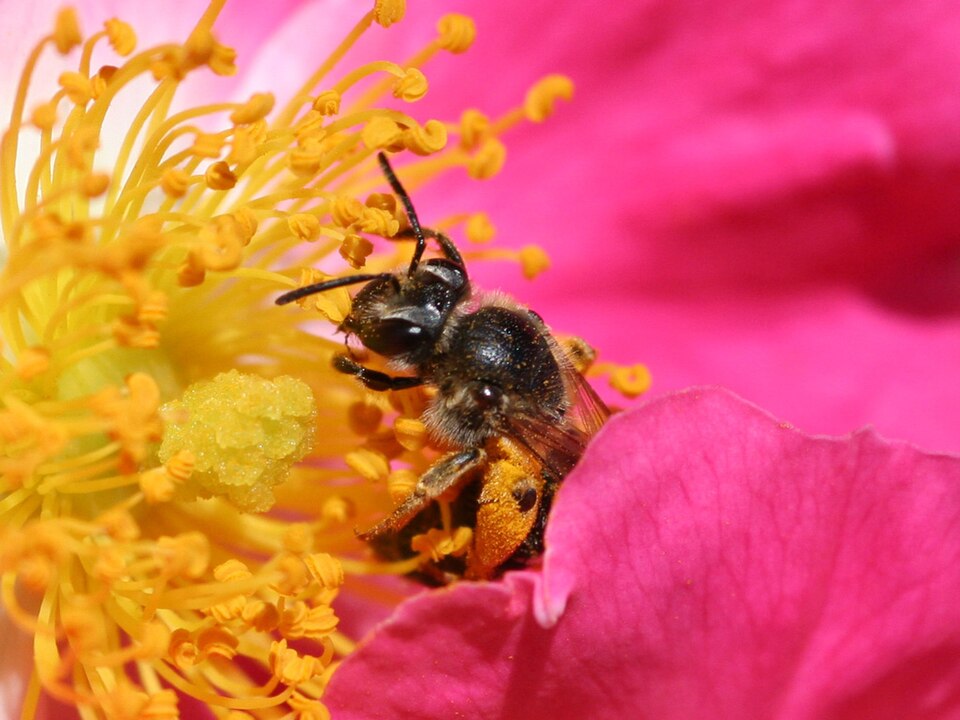
Featured Image: Bee Pollinating a Rose by Debivort via Wikimedia Commons