 Simcoe County Master Gardeners
Grow Natives!
PLANT PROFILE
COMMON NAME: Butterfly Milkweed
BINOMIAL: Asclepias tuberosa
| Family | Asclepiadaceae (Milkweed) |
| Cdn Native Range | Canada |
| Natural habitat | Fields, open woods or on roadsides; can also be found on stream margins |
| Type | herbaceous perennial |
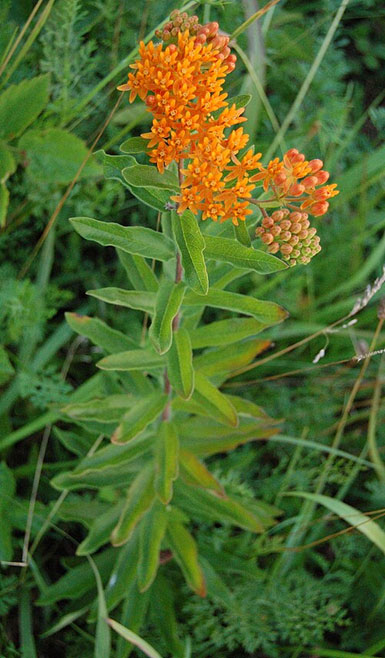
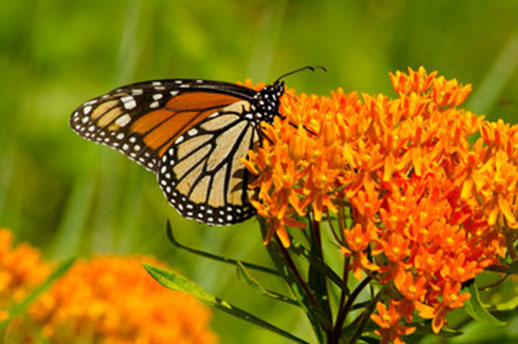
| Features | distinctive showy orange flowers |
| Growth habit | tall upright stems which create a compact bushy shape; not an aggressive spreader |
| Mature height | 30 – 90 cm (1 – 3 ft) |
| Mature spread | 30 – 60 cm (1 – 2 ft) |
| Life span | n/a |
| Cdn Hardiness Zone | 3 – 9 |
| Growing conditions | full sun; not shade tolerant |
| Soil conditions | dry to medium, well-drained or sandy soil |
| Watering needs | water in the first growing season, but drought-resistant when established |
| Fertilizer needs | no fertilizing necessary |
| Tolerance | drought resistant; not shade tolerant; attractive to rabbits; deer-resistant |
| Maintenance rank | low |
| Maintenance needs | before winter, cut back to the ground |
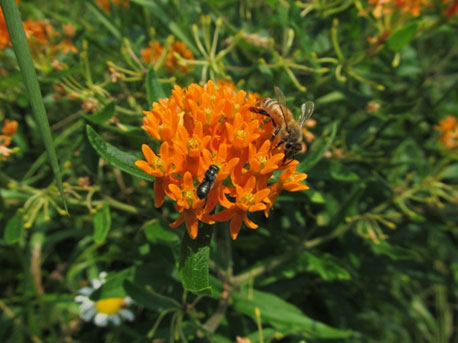
| Bloom | Small, star-shaped bright orange flowers in a large dome-shaped cluster on top of hairy stems; bloom period June, July and August; mildly sweet, candy-like fragrance |
| Fruit | n/a |
| Pollinator support | primary pollinators are bees and wasps rather than butterflies; nectar and pollen for native bees, butterflies and hummingbirds |
| Environmental support | larval food plant for the monarch and queen butterflies as well as a number of moths. |
| Garden Use | butterfly gardens; small gardens; back or front of flower bed/border |
| Risks & Cautions | no serious insect or disease problems; crown rot can be a problem in wet, poorly drained soils; susceptible to rust and leaf spot. Mildly toxic to humans and animals. |
References: Ontario Wildflowers, http://ontariowildflowers.com; Wikipedia, https://en.wikipedia.org/wiki/Asclepias_tuberosa