 Simcoe County Master Gardeners
Grow Natives!
PLANT PROFILE
COMMON NAME: Pagoda Dogwood
BINOMIAL: Cornus alternifolia
| Family | Cornaceae (Dogwood) |
| Cdn Native Range | hardy to Lake Superior and North Bay; common in southern and central ON |
| Natural habitat | forests, open woodlands as understory tree and slope bases near water |
| Type | deciduous small tree or large shrub |
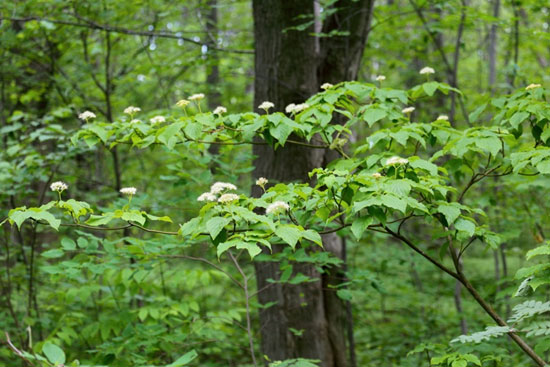
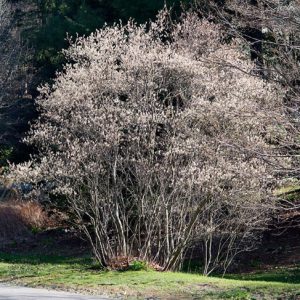
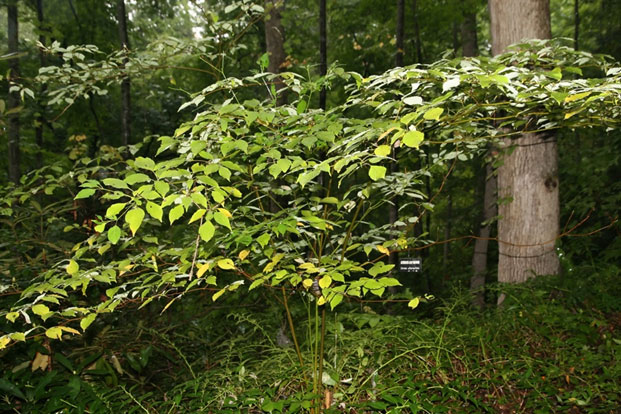
| Features | year-round interest; unique horizontal tiered branching and flat crown, alternate leaf arrangement different from other dogwoods; showy flower clusters; berries; vibrant red, burgundy or purple fall color; winter interest with layered branching |
| Growth habit | multi-stemmed; broad to upright spreading habit; slow growth |
| Mature height | 4.5 m-7.5 m (15 – 25 ft) |
| Mature spread | 6-9 m (20 – 30 ft) |
| Life span | 25 – 50 years |
| Cdn Hardiness Zone | zones 3 – 7 |
| Growing conditions | prefers partial shade; does not do well in compacted soils |
| Soil conditions | cool, moist, acidic, well-drained soil |
| Watering needs | keep well-watered with good air circulation |
| Fertilizer needs | annual organic compost |
| Tolerance | proximity to black walnut trees; full sun if moisture and mulch are provided to keep roots cool; exposure to strong winds not recommended |
| Maintenance rank | low; prune selectively in winter or early spring to enhance shape |
| Maintenance needs | light; remove damaged or diseased leaves |
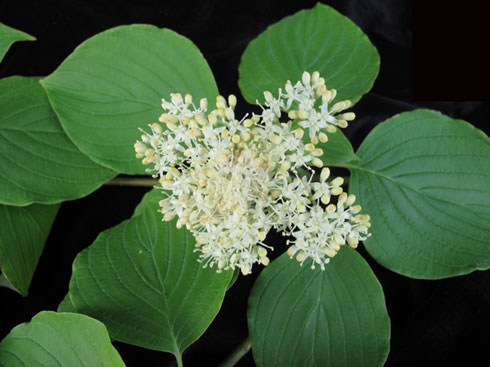
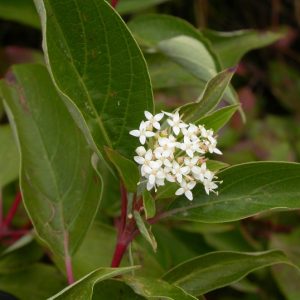
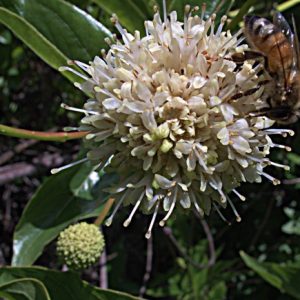
| Bloom | two-inch fragrant, creamy white; rounded to flat-topped clusters in June |
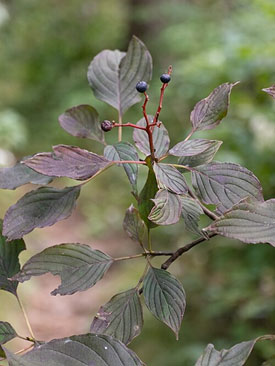
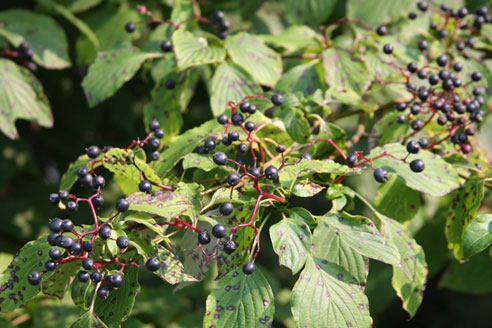
| Fruit | dark blue to black pea-sized berries on red flower stalks contain single seed; mature July–August |
| Pollinator support | nectar and pollen source for bees, wasps and larval host for many moth species |
| Environmental support | bitter fruit provides food source for grouse, pheasants, wild turkeys; squirrels, deer browse twigs and leaves |
| Garden Use | ornamental accent shrub in shade garden with four-season interest; naturalize with other natives or use in large shrub borders |
| Risks & Cautions | not prone to serious diseases, but susceptible to twig blight and canker diseases when trunk reaches about 4-inch diameter; may self-seed, but seedlings are easy to pull; prone to fungal diseases during wet years |
References: Kershaw, Linda, Trees of Ontario;Johnson’s Nursery, www.jniplants.com; Ontario Trees and Shrubs, www.ontariotrees.com