 Simcoe County Master Gardeners
Grow Natives!
PLANT PROFILE
COMMON NAME: Tamarack; Eastern Larch
BINOMIAL: Larix laricina
| Family | Pinaceae |
| Cdn Native Range | Native across most of Canada from NL to YU and north into the boreal forest; widespread throughout ON including Central, Northern and Southern ON |
| Natural habitat | bogs, fens, swamps, muskeg, peatlands, wet lowlands; occasionally on moist upland sites |
| Type | deciduous coniferous tree |
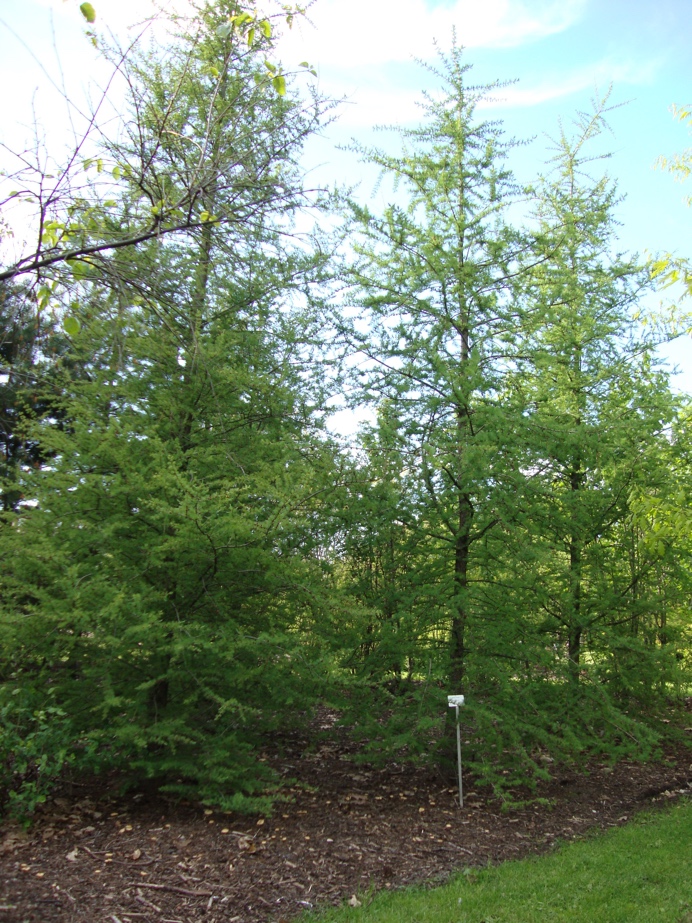
| Features | soft, light green needles in spring turning bright golden-yellow in fall before dropping; small upright cones; fine textured foliage; excellent fall colour; distinctive winter silhouette |
| Growth habit | upright, pyramidal when young, becoming more open and irregular with age; single trunk |
| Mature height | 12–20 m (40–65 ft) |
| Mature spread | 4–8 m (13–26 ft) |
| Life span | 100-200+ years |
| Cdn Hardiness Zone | 1–6 |
| Growing conditions | full sun |
| Soil conditions | moist to wet acidic soils; peat, muck, sandy or loamy soils; tolerates seasonal flooding; does poorly in dry, compacted or alkaline soils |
| Watering needs | requires consistent moisture, supplemental watering needed if planted outside natural wet habitat until established |
| Fertilizer needs | not required |
| Tolerance | cold; waterlogged soils; acidic conditions; some tolerance of seasonal flooding; intolerant of shade and prolonged drought |
| Maintenance rank | low (if sited properly) |
| Maintenance needs | minimal pruning; remove dead or damaged branches in late winter; ensure adequate moisture; not suited to dry urban lawns |
| Bloom | n/a |
| Fruit | small, upright woody cones (1–2 cm) persist through winter; seeds eaten by birds and small animals |
| Pollinator support | provides habitat and nesting sites for birds; host plant for certain moth species |
| Environmental support | important boreal species; stabilizes wet soils; provides wildlife shelter; supports birds |
| Garden Use | naturalized wet areas; pond edges; rain gardens (large scale); suitable for large properties with moist/acidic soil; not recommended for small urban lots |
| Risks & Cautions | susceptible to larch sawfly and eastern larch beetle; chlorosis may occur in alkaline soils; not tolerant of drought or heavy shade |
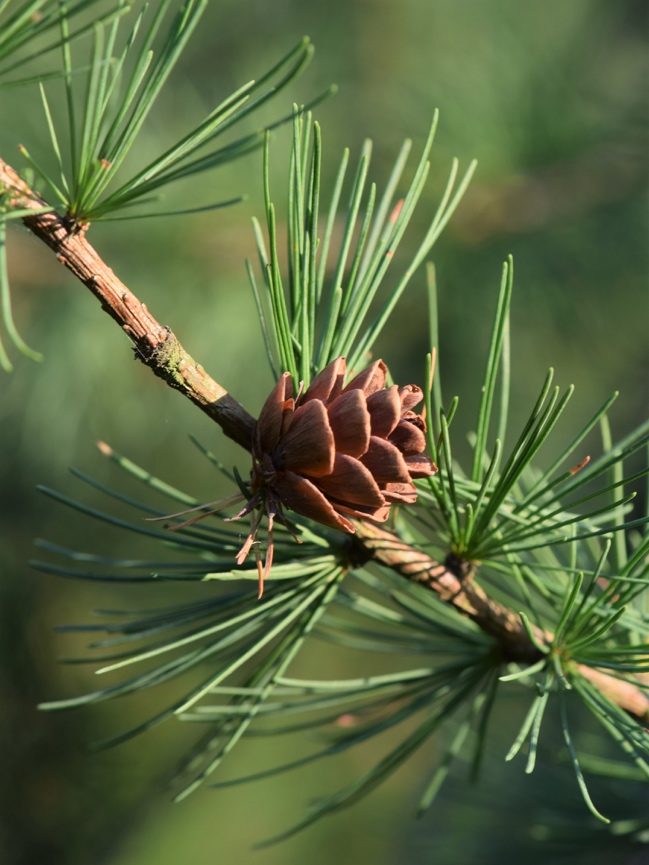
Photo Credits:
Tamarack Larch (credit: Anneli Salo, via Wikimedia commons)
Tamarack Larch – needles and cone (credit: Krzysztof Ziarnek, via Wikimedia commons)