 Simcoe County Master Gardeners
Grow Natives!
PLANT PROFILE
COMMON NAME: Eastern Hemlock
BINOMIAL: Tsuga canadensis
| Family | pinaceae (pine family) |
| Cdn Native Range | native to eastern North America from Nova Scotia to Great Lakes–St. Lawrence forest region |
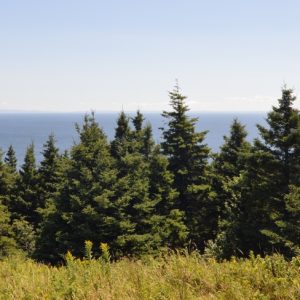
| Natural habitat | cool, moist, shady, protected sites, often with yellow birch, sugar maple, beech |
| Type | evergreen conifer |
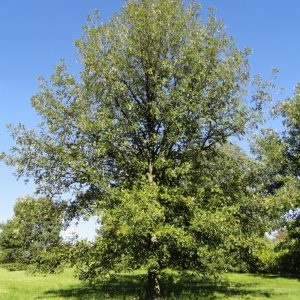
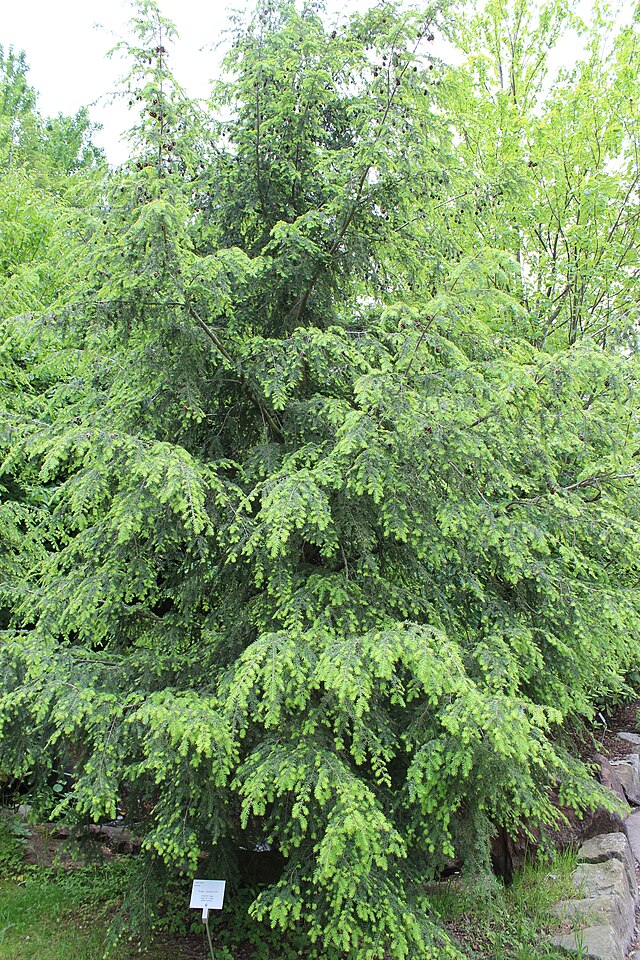
| Features | attractive pyramidal graceful shape. outer branches droop gracefully, flattened deep green short needles (1–2 cm long) with 2 white stripes underneath. main leader has drooping form. |
| Growth habit | moderate to slow growth; shallow roots; densely conical when young, irregular with age |
| Mature height | up to 18 m (60 ft) |
| Mature spread | 6-7.6 m (20–25 ft) |
| Life span | up to 600 years/young trees produce seed after 20–40 years |
| Cdn Hardiness Zone | 3-7 |
| Growing conditions | grow best out of direct sun/needs cool moist conditions in full sun with protection, or medium shade |
| Soil conditions | adapts to different soils but prefers slightly acidic soils, nutrient rich well-drained soil |
| Watering needs | water during drought conditions |
| Fertilizer needs | do not fertilize for first few months after planting to allow tree to establish/slow-release fertilizer early spring feeding only/do not overfertilize |
| Tolerance | full shade/tolerates full sun if kept moist. low tolerance of urban stress; salt; very wet or very dry soils |
| Maintenance rank | low |
| Maintenance needs | low; hemlock trees require protection from wind |
| Bloom | n/a |
| Fruit | small oval-shaped seed cones (12–20 mm long) are solitary, hang from branch tips and mature in 5–8 months. seeds released shortly after. |
| Pollinator support | n/a |
| Environmental support | trees provide dense cover and food for white-tailed deer, snowshoe hares, porcupines ruffed grouse and wild turkeys. nesting habitat for many bird species. songbirds feed on seeds. host plant for several moth species. |
| Garden Use | responds to pruning so can be planted as ornamental. grows well in groupings, makes good background planting in semi-shaded gardens or as screening |
| Risks & Cautions | hemlock woolly adelgid is threatening natural range/treatable in cultivation |
References: Linda Kershaw, Trees of Ontario, Lone Pine Publishing, Edmonton, Alberta, 2001;
Ortho Complete Guide to Trees and Shrubs, Meredith Publishing Group, 2004
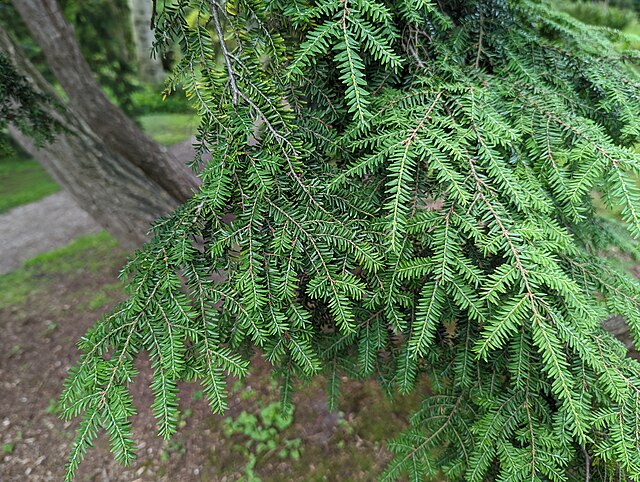
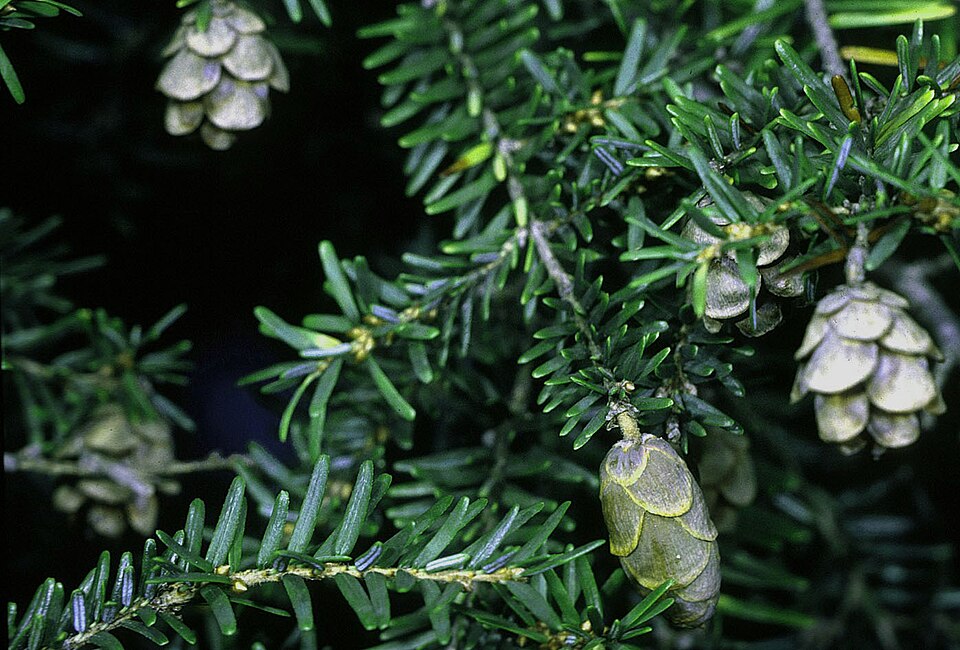
Photo Credits:
Eastern Hemlock (credit: Thesurvived99, CC BY 3.0)
Eastern Hemlock – branch (credit: USDAForest Service, Wikimedia Commons)
Eastern Hemlock – cones (credit: David J. Stang, Wikimedia Commons)