
By Joan Sundeen, Simcoe County Master Gardener, SCMG
In 2021, workers hired by the City of Mississauga Works Department arrived at the home of Wolf Ruck and proceeded to mow down his front yard. They were acting under the authority of a bylaw called Nuisance Weeds and Tall Grass Control. The bylaw office had been alerted by Ruck’s disgruntled neighbours who objected to Ruck’s rewilding of his front yard. The cost of the mowing was added to his property tax bill.
What was Ruck thinking by allowing native plants and weeds back into his property? Perhaps he was joining the growing number of civic and private propertyowners in embracing the Prairie Style Movement or New Wave Gardening gaining ground around the world.
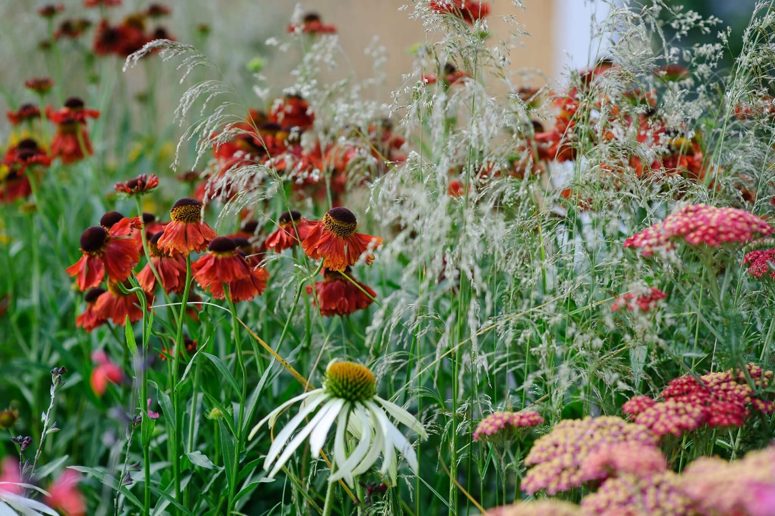
This movement, however, is not “letting things go”, but a deliberate style of “naturalistic planting (which) is an artistically stylized version of natural habitat”. (1)
Its chief characteristics, inspired by North America prairies, are the use of perennial native plants, particularly grasses, in groupings that support pollinators and promote the return of wildlife. This approach encourages biodiversity and sustainability. It embraces the life of the garden year-round and accepts decay as part of this life. There is a focus on foliage, texture, and layering with drifts or waves of plants that mimic a natural meadow. Seed heads are left over winter to provide shelter for wildlife and food for birds. Piet Oudolf famously said that brown is a colour, which we need to embrace as well as the colour of flowers. Ideally, this approach to gardening should require, once established, less maintenance and less watering or fertilizing.
How did we arrive at the manicured lawns and straight borders of the conventional garden? We need to look to the past for this.
Since humans have lived on this planet, they have sought to control the natural world that surrounds them. What began as humans’ quest for safety, food and shelter evolved into a need to dominate the natural world and to bend it to their will. The elaborate gardens of the ancient world provided a respite and a retreat from chaos and signalled one’s power and wealth. Water was brought in from distant sources by elaborate infrastructure projects and exotic plants imported to delight the eye, as seen in the paradise gardens of the Islamic world.
Later European gardens, with their geometric lines and elaborate plantings, continued this need to command the natural world, and by extension, to show dominance over the human population as well.
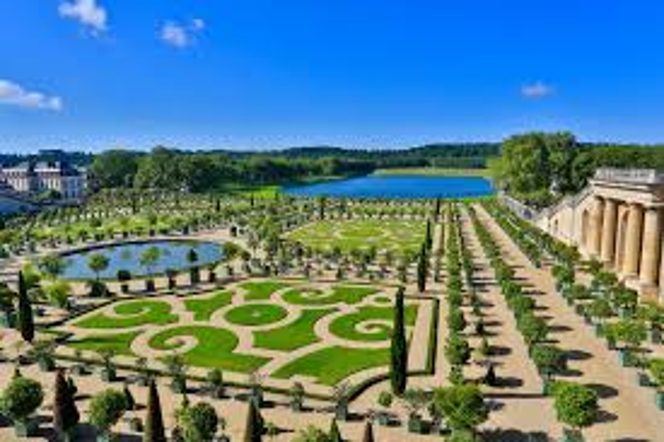
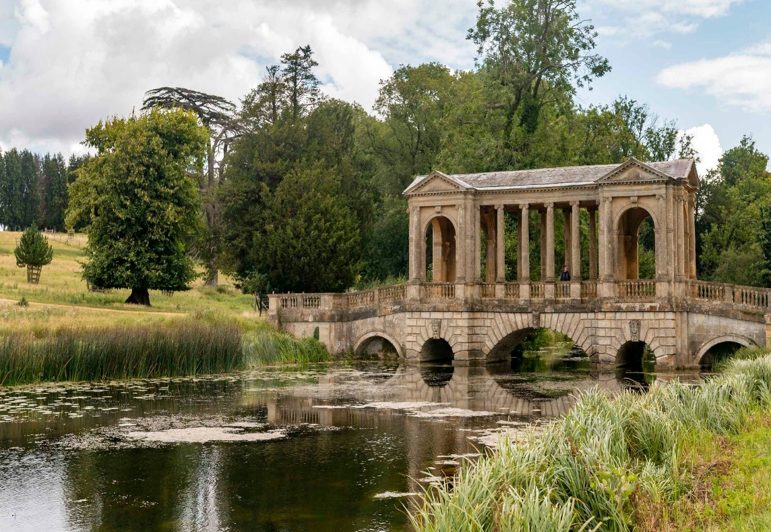
Even the Landscape Movement of the 18th century required vast human labour, the rerouting of rivers and reshaping of the topography to achieve a natural looking, but controlled, effect. The funds to achieve this were linked to colonialism, trade, and sometimes, slavery.
Colonists, who were used to a Europe that was tamed, arrived in Canada and viewed the natural world they encountered as a threat and an enemy to be conquered. Northrup Frye, in the Literary History of Canada (1965) likened this attitude to a garrison mentality- us against the wilderness. Susanna Moodie, in Roughing it in the Bush (1852), warned prospective emigrants about the perils they would encounter and the skills they would need to survive.
We have come to realize that we are part of the natural world and that we have destroyed much of it at our peril. Pollinators and other beneficial insects are threatened by pesticides and habitat loss, air and water are compromised and climate change gives us daily reminders that nature is pushing back.
Instead of living with climate anxiety, the new prairie garden movement may provide an opportunity for change- environmentally and psychologically. Native plants will provide food for pollinators and habitat for wildlife. Increased contact with the natural world has been proven to benefit humans. Blood pressure has been documented to be reduced, cognitive function improved, and mental health- anxiety, anger and depression- alleviated through more time in nature. Sleep is regulated with regular exposure to natural light. Doctors now will write a prescription for nature walks.
This achieved by appealing to the senses. The colours and the scents of flowers appeal to the eye as do the many textures. Breezes move grasses with a rustlingsound. Paths leading into the garden invite touch. Borders define the intent of the garden as it sits in the landscape.
In 2026, with the support of the Canadian Constitution Foundation, Wolf Ruck appealed the bylaw ruling against his naturalized yard and won. Justice M. T. Doi ruled that Ruck had the right to freedom of expression in his quest for biodiversity and sustainability on his property. There is an 18 minute documentary called “A Wolf in the Suburbs” that chronicles this legal battle. This film was nominated for a Best Documentary Short Film at the 99th Oscars.
In his many podcasts, Entomologist Doug Tallamy says that,
For the first time in history, gardening has taken on a role that transcends the needs of the gardener. Like it or not, gardeners have become important players in the management of the nation’s wildlife. It is now within the power of individual gardeners to do something that we all dream of doing, to make a difference. In this case, the difference will be to the future of biodiversity, to the native plants and animals of North America and the ecosystems that sustain them. (2)
It will take time, but, with education and awareness, this movement will flourish to the benefit of all the natural world, which includes us. If beauty is in the eye ofthe beholder, that eye needs to change.
Annie Dillard, in Pilgrim at Tinker Creek wrote:
“The real question is: why is it beautiful? The answer must be, I think, that beauty and grace are performed whether or not we will sense them. The least we can do is to be there.” (3)
Text Sources:
(1)Oudolf, Piet & Noel Kingsbury (2013). Planting: A New Perspective. Timber Press, Portland Oregon.
(2) Tallamy, D. W. (2019). Nature’s Best Hope: A New Approach That Starts in Your Yard . Kindle Edition.
(3)Dillard, A. (1974) Pilgrim at Tinker Creek: Harper’s Magazine Press.
Photo Credits:
BBC Gardeners’ World Magazine (2020, March 6). Best Plants for a Prairie Border.
Getty Images/Jose Fuste Raga Architectural Digest. April 15, 2020.
National Trust Images/Hugh Mothersole MG


