 Simcoe County Master Gardeners
Grow Natives!
COMMON NAME: Sugar Maple
BINOMIAL: Acer saccharum
| Family | Sapindaceae |
| Cdn Native Range | Native to eastern and central Canada from NS to MN; widespread throughout ON; a dominant species in the Great Lakes–St. Lawrence forest region |
| Natural habitat | Deciduous and mixed hardwood forests; well drained upland sites |
| Type | Deciduous broadleaf tree |
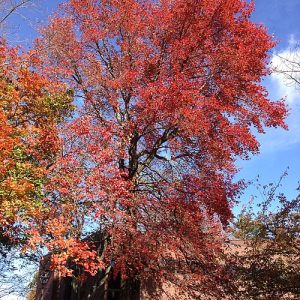
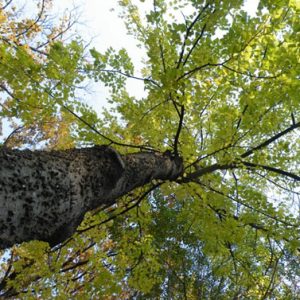
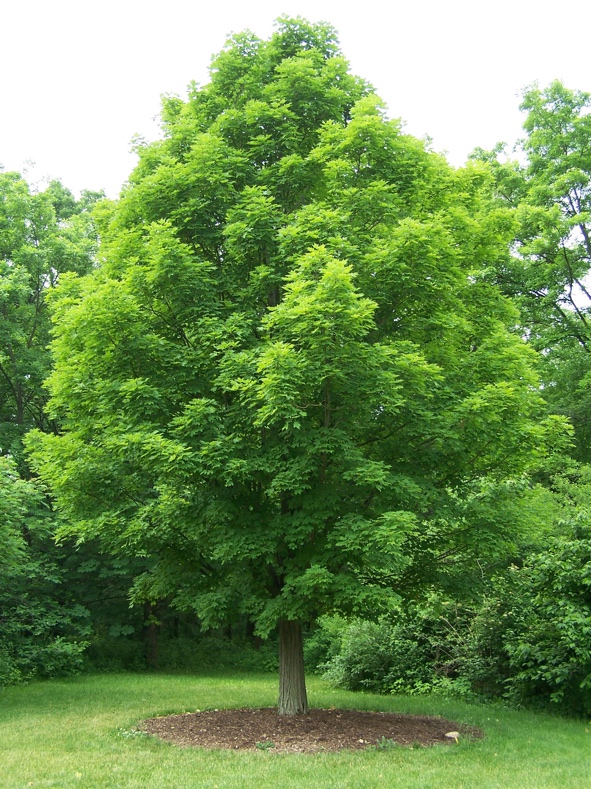
| Features | Iconic 5-lobed leaves, spectacular fall colour; smooth grey bark becoming furrowed with age; winged samaras; source of maple syrup; shade tree |
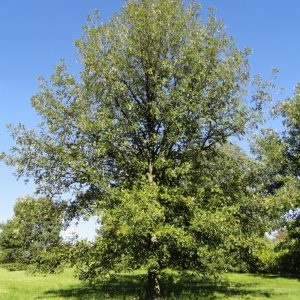
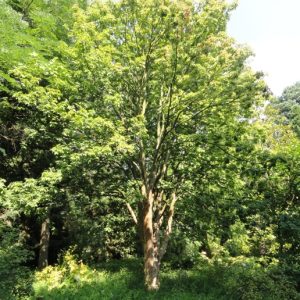
| Growth habit | Upright, oval to round crown; single trunk; dense canopy |
| Mature height | 18–30 m (60–100 ft) |
| Mature spread | 12–18 m (40–60 ft) |
| Life span | 200–300+ years |
| Cdn Hardiness Zone | 3–8 |
| Growing conditions | Full sun to part shade (shade tolerant when young) |
| Soil conditions | Prefers moist, well drained loam; rich, slightly acidic soils; intolerant of heavy compaction, salt and prolonged flooding |
| Watering needs | Moderate; requires consistent moisture when young; supplemental watering recommended during extended dry periods |
| Fertilizer needs | Generally not required in healthy soils; benefits from leaf mulch |
| Tolerance | Shade (especially in youth); cold; moderate wind; sensitive to road salt, soil compaction, air pollution, and drought |
| Maintenance rank | Low to moderate (depending on site conditions) |
| Maintenance needs | Minimal pruning (late winter), protect root zone from compaction; avoid mechanical injury to trunk; mulch to conserve moisture when young |
| Bloom | Small, greenish yellow flowers in spring before leaf-out; important early nectar and pollen source |
| Fruit | Paired winged samaras (“maple keys”) maturing in late summer to fall; seeds dispersed by wind |
| Pollinator support | Early season nectar and pollen source for native bees; host plant for numerous moth and butterfly species; seeds and buds feed birds and small animals |
| Environmental support | Keystone species in eastern forests; provides significant wildlife habitat; supports diverse insect populations; stabilizes soil; contributes to forest canopy structure; leaf litter enriches soil |
| Garden Use | Large shade tree; woodland restoration; suitable for large residential properties with appropriate soil; not ideal for narrow boulevards or compacted urban sites |
| Risks & Cautions | Sensitive to salt and soil compaction; shallow surface roots may affect lawn growth; susceptible to tar spot and verticillium wilt |
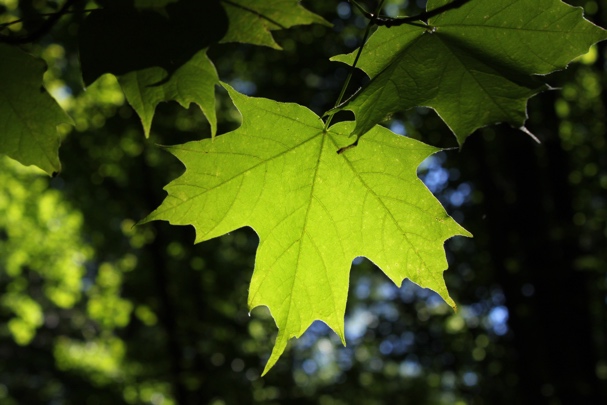
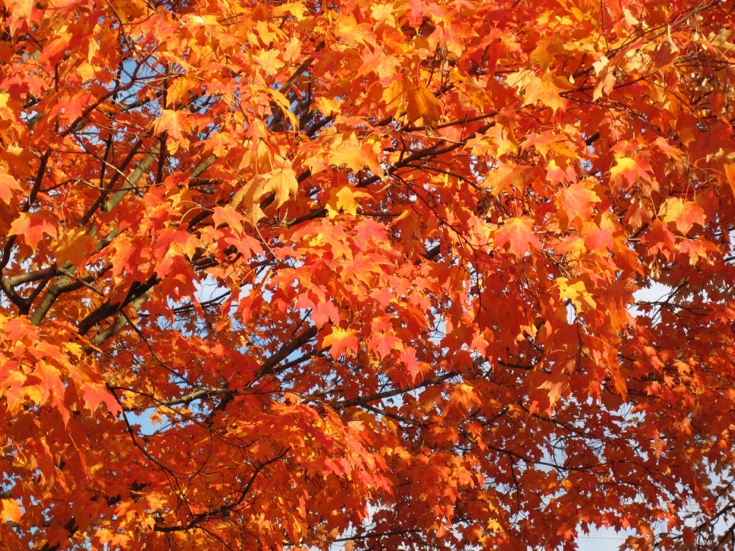
Photo Credits:
Acer saccharum (credit: Bruce Marlin, via Creative Commons)
Acer saccharum – foliage (credit: Cruiser, via Creative Commons)
Acer saccharum – fall foliage (credit: James St. John via Creative Commons)