 Simcoe County Master Gardeners
Grow Natives!
PLANT PROFILE
COMMON NAME: Black Gum (also known as Black Tupelo)
BINOMIAL: Nyssa sylvatica
| Family | Nyssaceae |
| Cdn Native Range | Limited areas of Southern Ontario, particularly near Lake Erie |
| Natural habitat | wet forest edges, meadows and fields, shores of rivers or lakes, swamps |
| Type | deciduous tree |
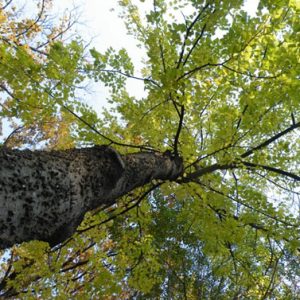
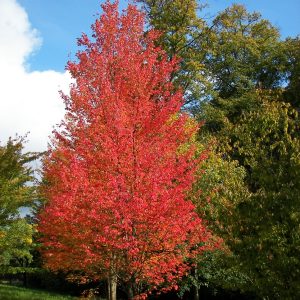
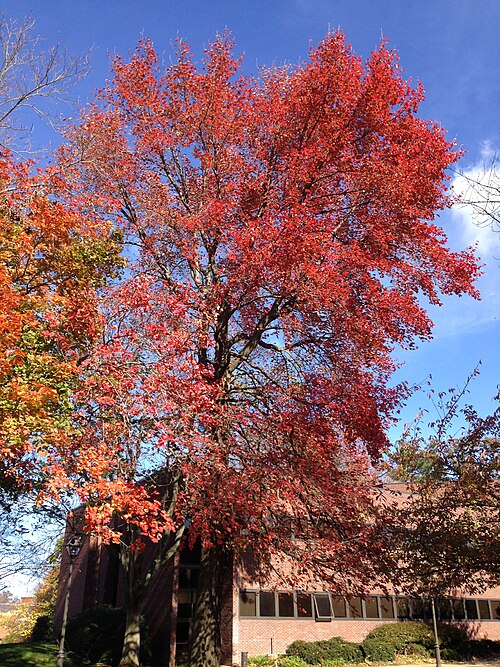
| Features | brilliant, early red-orange–purple fall foliage; dark gray bark is deeply furrowed and scaly in middle age, transitions to light gray smooth plates in old age |
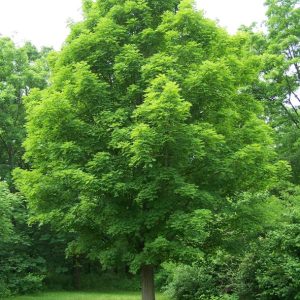
| Growth habit | long-lived, slow growing (12–15 inches per year) with pyramidal shape when young, spreading with age; branching grows in distinct horizontal layers; becomes irregular and flat-topped on old trees; alternate, oblong to oval leaves thick, dark green, glossy upper surface, whitish underneath |
| Mature height | 20–25 metres (66–82 ft) |
| Mature spread | 6–9 meters (20–30 ft) |
| Life span | 150–300 years |
| Cdn Hardiness Zone | 4–7 |
| Growing conditions | full to part sun; prefers moist conditions |
| Soil conditions | moist, acidic, well-drained soils |
| Watering needs | regular watering when young |
| Fertilizer needs | compost, natural mulch |
| Tolerance | shade, wet areas, varied soils, heavy clay and compaction |
| Maintenance rank | low |
| Maintenance needs | remove dead or damaged branches late winter to early spring; prune to shape if desired; deep taproot, transplanting when young recommended |
| Bloom | small greenish-white clusters May–June |
| Fruit | 1–3 fruits together on long stalk; black-blue ovoid fleshy drupe |
| Pollinator support | nectar for bees |
| Environmental support | food source for wildlife and migrating birds, especially robins; nesting or den habitat for bees and small mammals; source of wild honey in some areas |
| Garden Use | shade tree, ornamental specimen tree for fall color, needs space |
| Risks & Cautions | forest tent caterpillars, tupelo leaf miners, scale; protect young trees from deer browsing; fruit can be messy – do not plant near patios. |
References: Wikipedia; University of Guelph Arboretum; Natural Resources Canada, Forest Resources
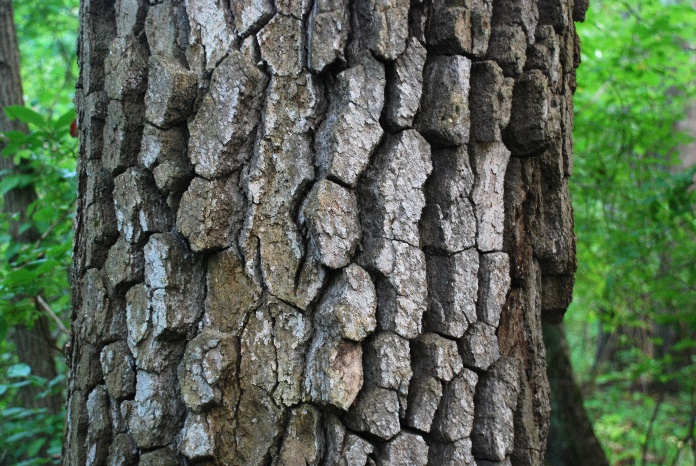
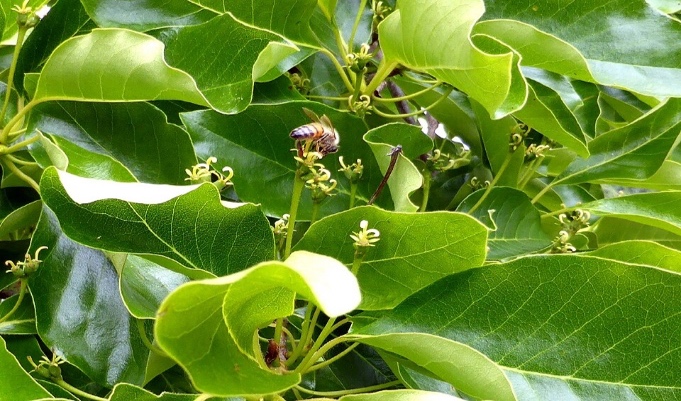
Photo Credits:
Black Gum– fall color (credit: Famartin, CC BY-SA 4.0 via Wikimedia Commons)
Black Gum– bark (credit: DouglasGoldman, CC BY-SA 4.0 via Wikimedia Commons)
Black Gum–foliage (Credit: Wendy Cutler, CC BY-SA 2.0 via Wikimedia Commons)