 Simcoe County Master Gardeners
Grow Natives!
PLANT PROFILE
COMMON NAME: Bearberry, Kinnikinick
BINOMIAL: Arctostaphylos uva-ursi
| Family | Ericaceae |
| Cdn Native Range | all of Canada except NB, NS, PE |
| Natural habitat | open woodlands |
| Type | small woody shrub; spreading woody stems, branches |
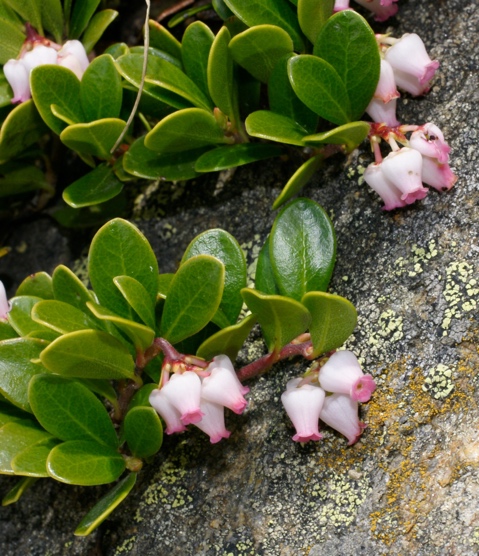
| Features | pink white flowers in spring; glossy dark green leaves; red edible berries; deep red fall colour |
| Growth habit | short slow growing spreading, multi-stemmed |
| Mature height | 10–30 cm (12”) |
| Mature spread | 1–2 m (3–6 ft) up to 4.5 m (15’) in ideal conditions |
| Life span | n/a |
| Cdn Hardiness Zone | 2–6 |
| Growing conditions | full sun – part shade |
| Soil conditions | tolerates a range of soils incl. sand; well-drained acidic rocky soils |
| Watering needs | as required |
| Fertilizer needs | none needed other than to increase pH acidity if the plant is weak |
| Tolerance | drought, shade, can tolerate deer and rabbits |
| Maintenance rank | low |
| Maintenance needs | no maintenance needed but to contain if desired |
| Bloom | April – June, small white pink bell shaped small clusters are showy when the plant matures |
| Fruit | showy red berries into the winter; edible but not recommended for taste |
| Pollinator support | larval hosts for a variety of butterflies and moths; bees consume the nectar and pollen |
| Environmental support | birds and other species feed on the berries; winter habitat for winter foraging; erosion protection |
| Garden Use | groundcover, slopes, rocky-sandy landscape, rock gardens |
| Risks & Cautions | may attract deer |
References: Ontario Plants, on.plants.ca
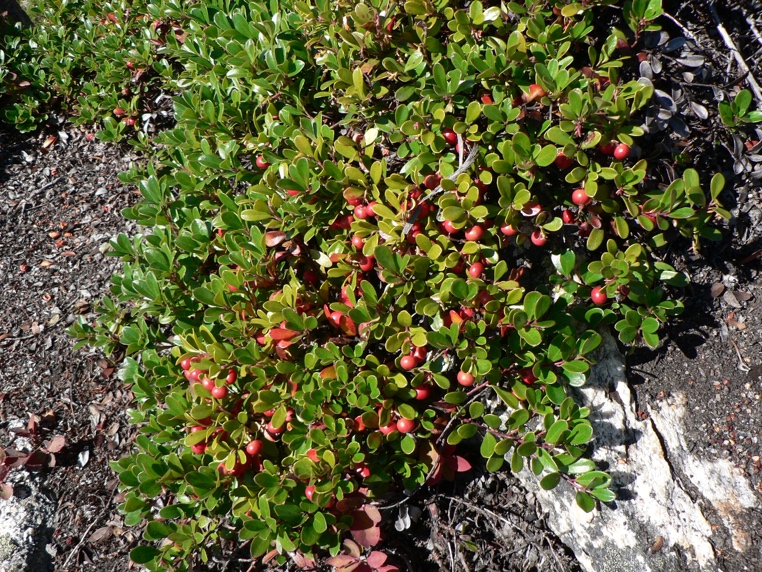
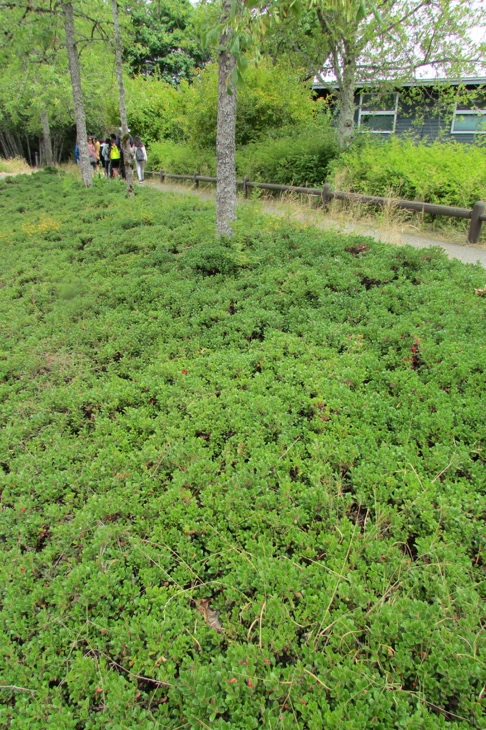
Photo Credits:
Bearberry – flowers (credit: Robert Flogaus-Faust, CC BY 4.0)
Bearberry (credit: Walter Siegmund, CC BY-SA 3.0)
Bearberry – groundcover (credit: Chris Light, CC BY-SA 4.0)a