
By Cynthia Lauer, Master Gardener, SCMG
While it may be premature to announce the end of the lawn, gardeners have valid and growing doubts about the value of perfectly manicured turf. Part 1 of this article reviewed the challenges of maintaining a lawn and pointed out its multiple environmental costs. Several sedges and grasses were described as native alternatives.
Part 2 lists many wonderful native plants all gardeners should try if they have full sun or part-sun conditions. The birds and bees will thank you!
GROUNDCOVERS FOR FULL-SUN AND PART-SUN
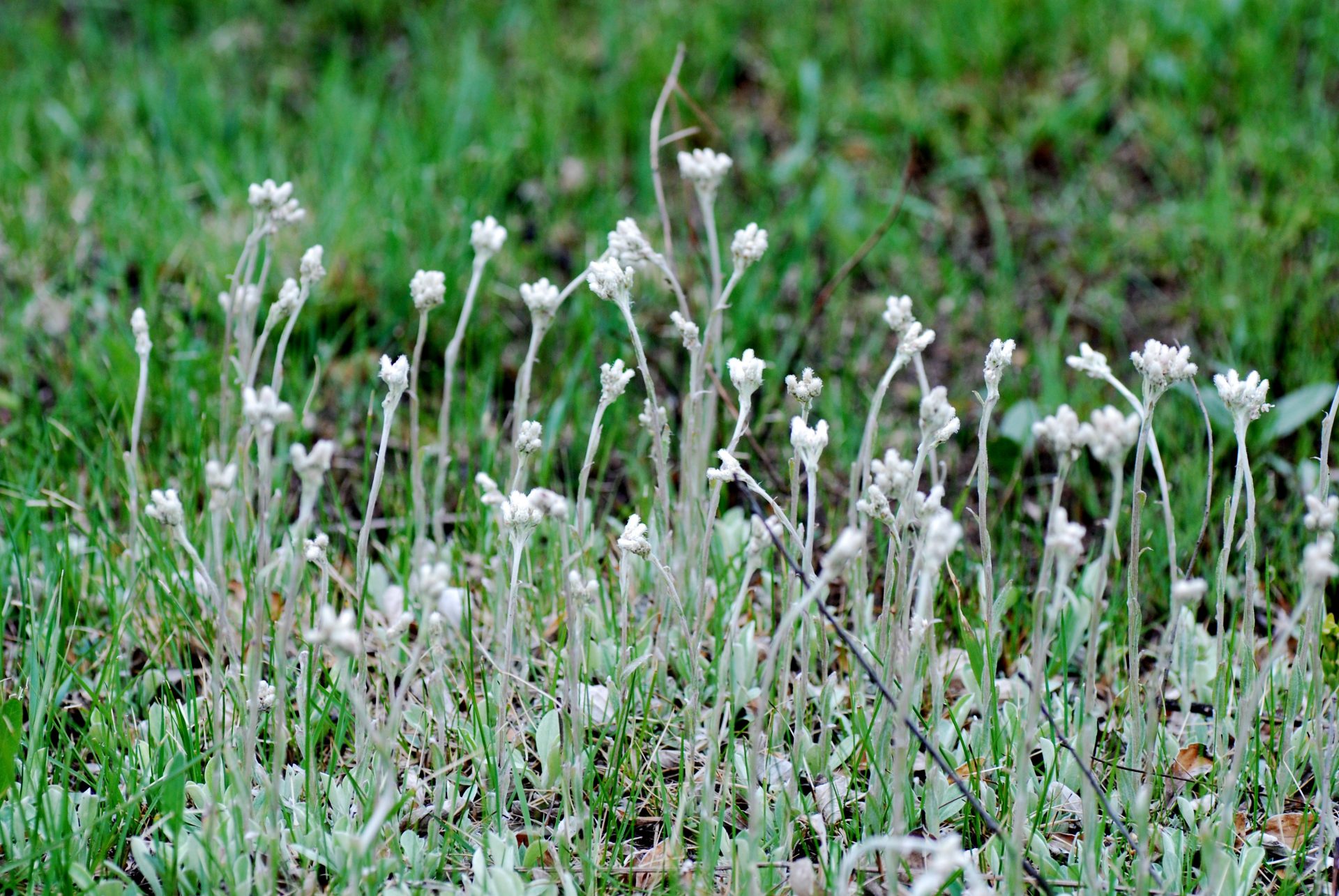
Silverweed (Argentina anserina)
Height: 15–30 cm
Hardiness zone: 5–9
Exposure: sun to part sun
Growth Rate: fast
Tolerance for foot traffic: low
Silverweed is most often found in moist, sandy soil but it is very adaptable. Found growing all over the temperate northern hemisphere and in Canada, from Nova Scotia, New Brunswick, Prince Edward Island, and Ontario, its silvery-green foliage is accompanied by long-lasting yellow flowers in the summer that support a few bee species—including three species of specialist bees—and hoverflies. It is resistant to grazing deer. Spreading vigorously by stolons, this plant may overwhelm smaller plants. Silverweed is excellent for erosion control.
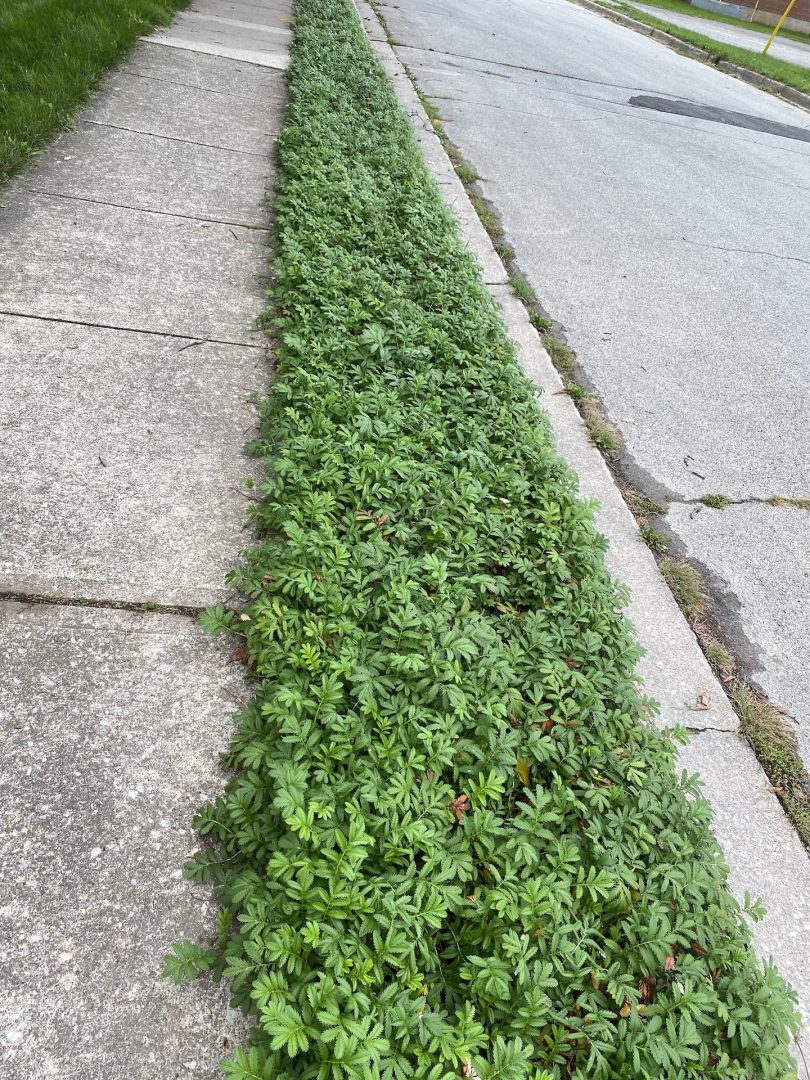
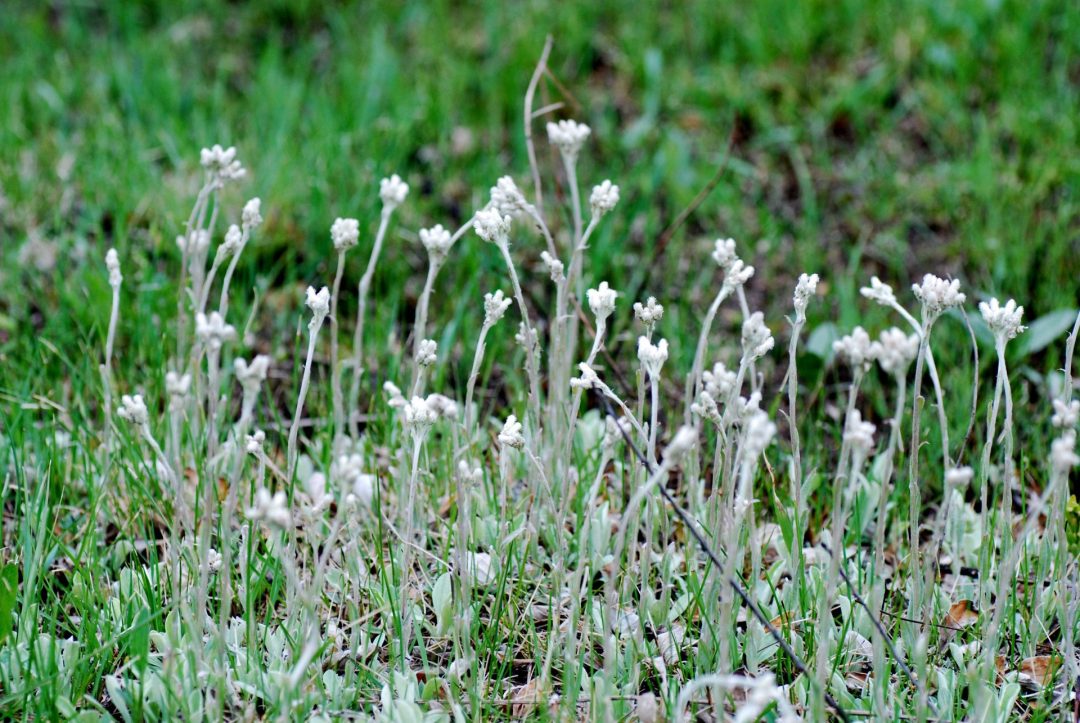
Field Pussytoes (Antennaria neglecta)
Height: 10–40 cm
Hardiness zone: 4–9
Exposure: sun
Growth Rate: fast
Tolerance for foot traffic: moderate
Field Pussytoes is a low-growing groundcover with a high tolerance for drought. In early spring, white flower heads rise to a height of around 30 cm. The silver-green foliage covers the ground quickly and stays green until the arrival of snow. Both the woolly foliage and fluffy seed heads are decorative. Tolerant of salt and poor soil, it is suitable for boulevard gardens. Field Pussytoes feeds caterpillars of the American Lady butterfly and its flowers are attractive to small solitary native bees. The plant is native to Canada and can be found coast to coast.
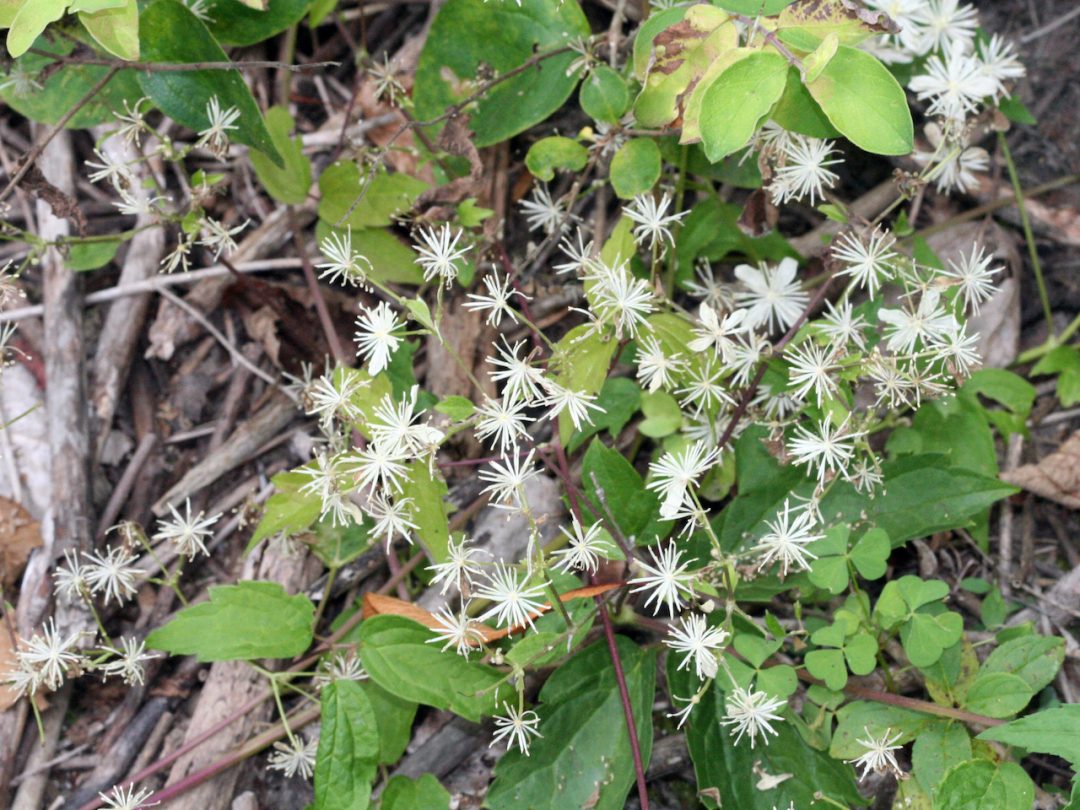
Virgin’s Bower (Clematis virginiana)
Length: 2–6 m
Hardiness zone: 3–8
Exposure: full sun to part shade
Typically grown as a vine with a native range from Quebec to Alberta, Virgin’s Bower may be used as a groundcover where it grows easily and quickly in average, medium to wet, well-drained soils. If given support, it grows as a vigorous, deciduous, twining vine climbing to 6 m. Without support, it will sprawl and self-seed along the ground as a dense, tangled ground cover. Its white flowers are fragrant and bloom profusely from late August to October; they attract bees, wasps and flies. Like other clematis species, the flowers give way to ornamental, plume-like seed heads.
Moss Phlox (Phlox subulata)
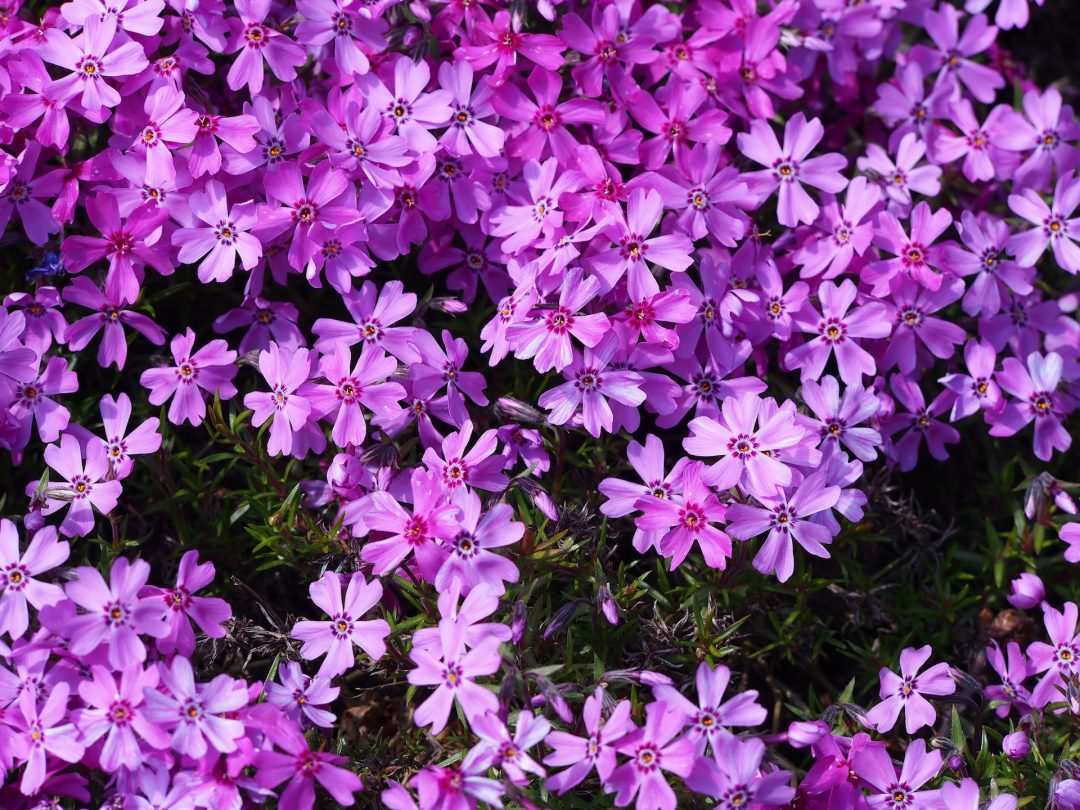
Height: 5–20 cm
Spread: 7–30 cm
Hardiness zone: 4–8
Exposure: full sun
When in bloom in mid- to late spring in its native range of Ontario, Moss Phlox is very showy for weeks. It forms low-growing evergreen mats that spread quickly along the ground. A larval host for several species of moth, this plant provides nectar and pollen for bees, butterflies and skippers.
Bearberry (Arctostaphylos uva-ursi)
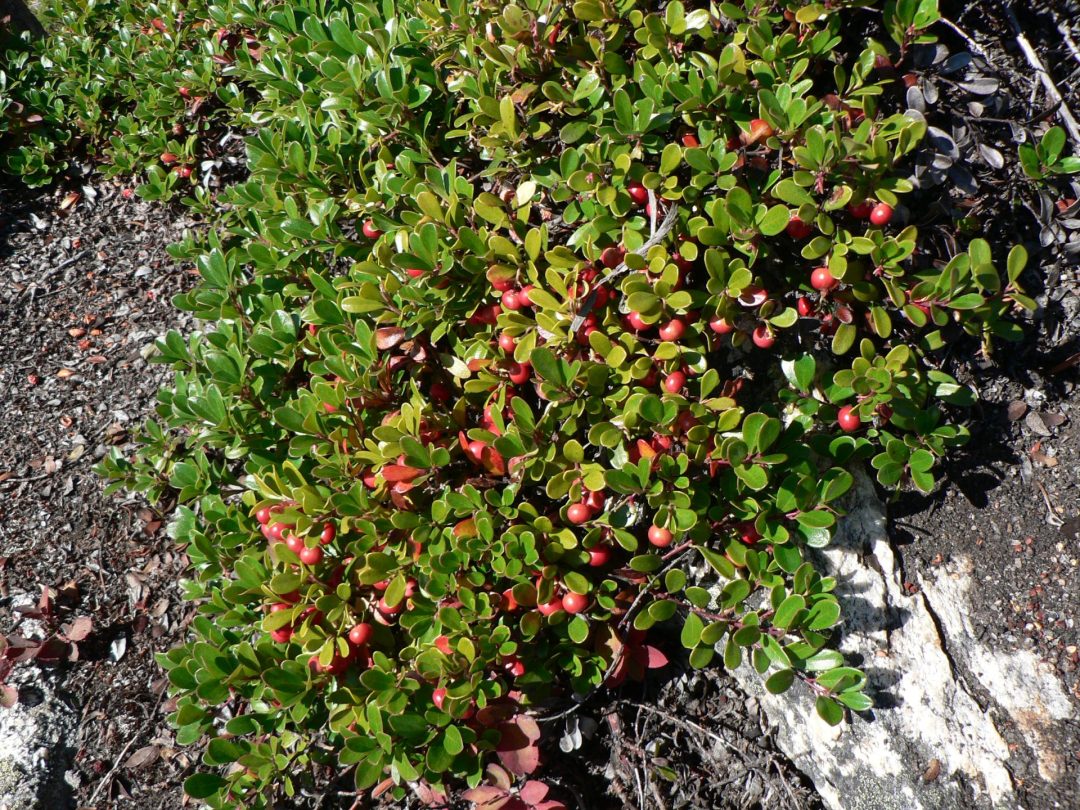
Height: 5–15 cm
Hardiness zone: 2–6
Exposure: full sun to part shade
Bearberry is an easy-to-grow, drought-tolerant, evergreen groundcover (technically a shrub) that prefers average to dry soil. Its small clusters of flowers attract bees and its bright red fruits are eaten by birds. It spreads well on sandy sites and roots from trailing stems, creating colonies. When grown on a slope, it is a valuable plant for erosion control. Bearberry is native to Canada and grows from coast to coast.
Woolly Blue Violet (Viola sororia)
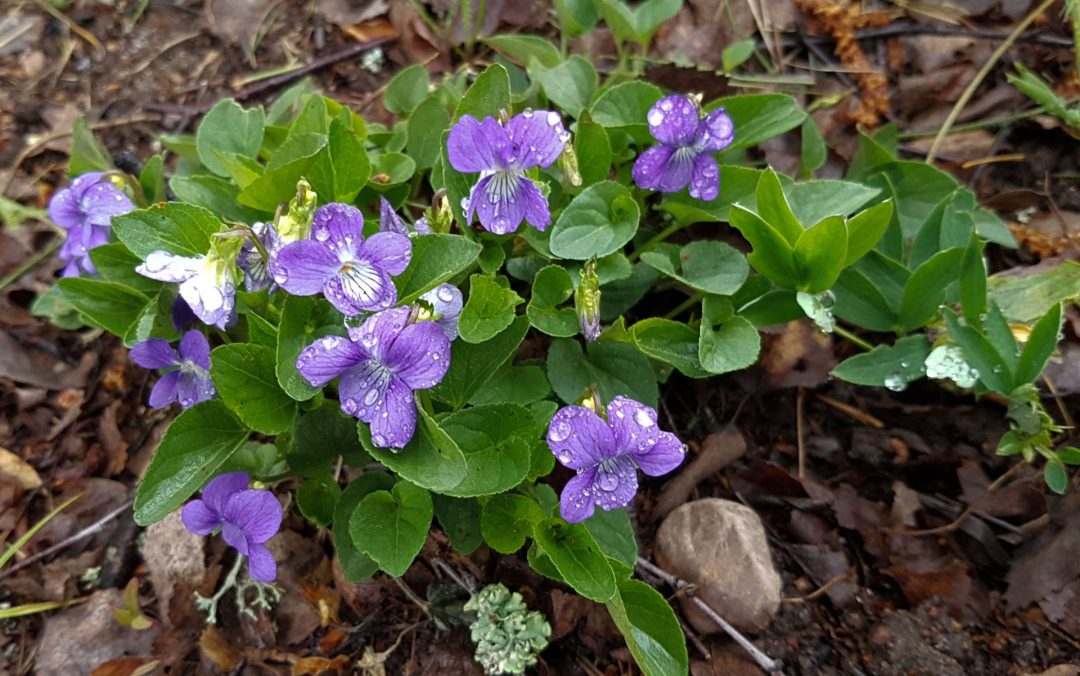
Height: 10–20 cm
Hardiness zone: 5–9
Exposure: sun to part shade
Growth Rate: fast
Tolerates foot traffic: moderate
Woolly Blue Violet prefers light shade but will tolerate full sun in moist soils. Readily self-sowing, it will become a colony; use it as a groundcover around taller plants that can compete with it or grow it in the shade where it is less aggressive. It greens up and flowers very early in the spring. The blooms are showy and long-lasting and attract bees, flies and skippers. Violets are larval hosts plants for Fritillary butterflies and many species of moths. Viola sororia is native to Nova Scotia, New Brunswick, Prince Edward Island, and Ontario. Other native violets to consider are readily available in nurseries: sweet white violet (Viola blanda), bog violet (Viola conspersa), Canada violet (Viola canadensis), birdfoot violet (Viola pedata), and downy yellow violet (Viola pubescens).
More recommendations for native groundcovers in sun
Canada Anemone/Canada Windflower (Anemone canadensis); Yarrow (Achillea millefolium); Juniper (Juniperus horizontalis); Common cinquefoil (Potentilla simplex)
Photo Credits:
Argentina anserina: Sharon and Wayne Brandt
Antennaria neglecta: wackybadger, CC BY-SA 2.0
Clematis virginiana: R. A. Nonenmacher, CC BY-SA 4.0
Phlox subulata: Agnieszka Kwiecień, Nova, CC BY-SA 4.0
Arctostaphylos Uva-Ursi: Walter Siegmund, CC BY-SA 3.0
Viola sororiaBernt Fransson, CC BY-SA 4.0


