By Cynthia Lauer, Master Gardener, SCMG
As the dominant landscaping feature, lawns enjoy tremendous popularity as a tough outdoor carpet whether in a narrow urban backyard or a large public park.
But there is a long list of reasons why turfgrass should be replaced with native groundcover plants. Irrigation, mowing, fertilizing, weeding, aerating, de-thatching, re-seeding and top-dressing are required for a lawn to look its best. Grooming the lawn requires machinery powered by fossil fuels. The nitrogen from fertilizers runs off into surface and groundwater contaminating water after extreme weather events. Regular watering of lawns risks the depletion of water aquifers in some areas. Turf is also vulnerable to insects such as chinch bug, sod webworms, white grub larvae, and crane fly larvae that have to be managed.
Lawns contribute nothing to the ecosystem. They exist to satisfy people; they do nothing for other species. A sterile monoculture, lawns occupy vast expanses of land that offer neither habitat nor nesting sites for insects and wildlife. This has a negative impact on birds and mammals that depend on insects and native plants to survive and reproduce.
The best alternative to the lawn is native groundcovers. Attractive, sustainable, and cost-effective, these plants not only solve the multiple problems of turfgrass, they also make a positive and significant contribution to the environment by supporting native bees, butterflies, and other insects. Native plants provide habitat in the form of food sources, nesting and overwintering sites for insects, birds, and mammals.
How to Choose Native Groundcovers
When looking for plants to replace your lawn, the same factors come into play when shopping for other plants. These include soil and light conditions, moisture, hardiness zone, and interactions with other plants.
Sedges and Grasses
When it comes to native groundcovers, there are additional considerations such as the amount of foot traffic expected and the desired appearance of the planted area. Some gardeners may want the look of turf and seek a groundcover they intend to mow. Others may prefer a more natural look with a mix of heights and textures. An area may be planted exclusively with low groundcovers or they may be integrated into beds with shrubs and trees or with paths, rocks, and other hardscaping. Whatever the design, native groundcovers should be diverse for maximum benefit. This will ensure an attractive blend of foliage and blooms, offering a long season of interest to both people and pollinators.
Here are some native grassy plants to consider as environmentally-friendly groundcovers. In part 2 of this article, we’ll take a look at many other species for sun and shade.
Oak Sedge (Carex pensylvanica)
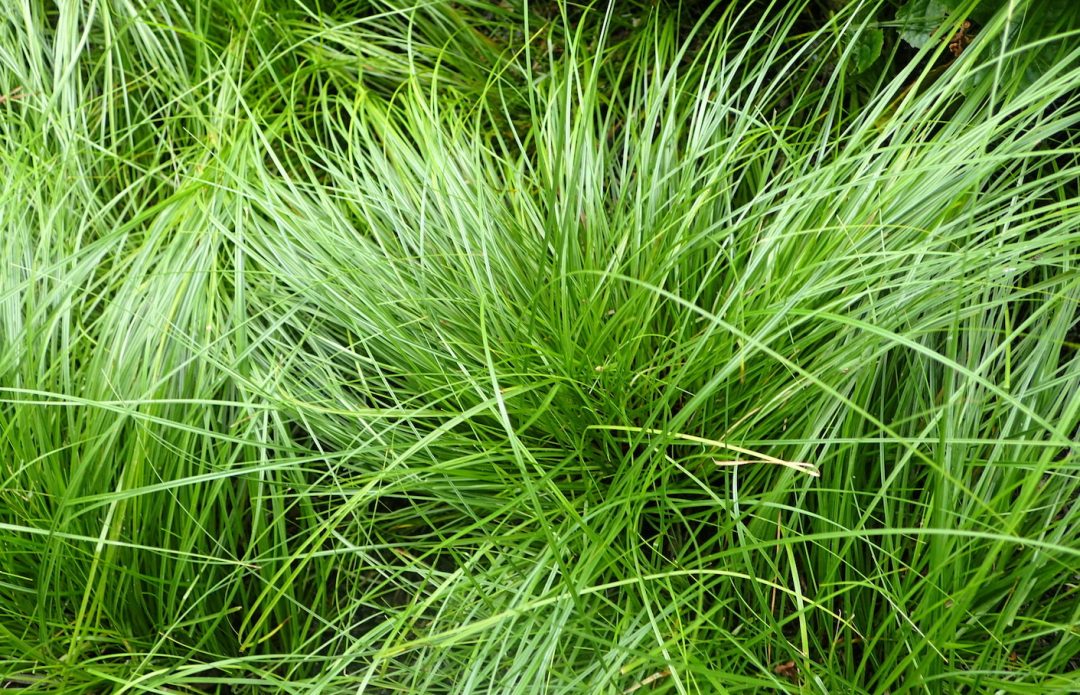
Height: 15–30 cm
Spread: 15–30 cm
Hardiness zone: 3–8
Exposure: full sun to full shade
Native to Nova Scotia, New Brunswick, Ontario, and Alberta, Oak Sedge (also known as Pennsylvania Sedge) is gaining popularity as an adaptable, semi-evergreen groundcover and lawn alternative. Growing at a medium rate, this is a low-maintenance plant featuring soft, delicate, arching leaves. Tolerant of dry shade, it can handle sunny conditions if the soil is kept moist. It offers good fall colour. Use this sedge to stabilize shady slopes. In ideal conditions, Oak Sedge spreads by rhizomes at a moderate rate to eventually create a carpet of wispy grass-like leaves. It can be mowed once or twice a year if desired. This grass supports several specialist species of butterflies, skippers, and moths.
Canada Wild Rye (Elymus canadensis)
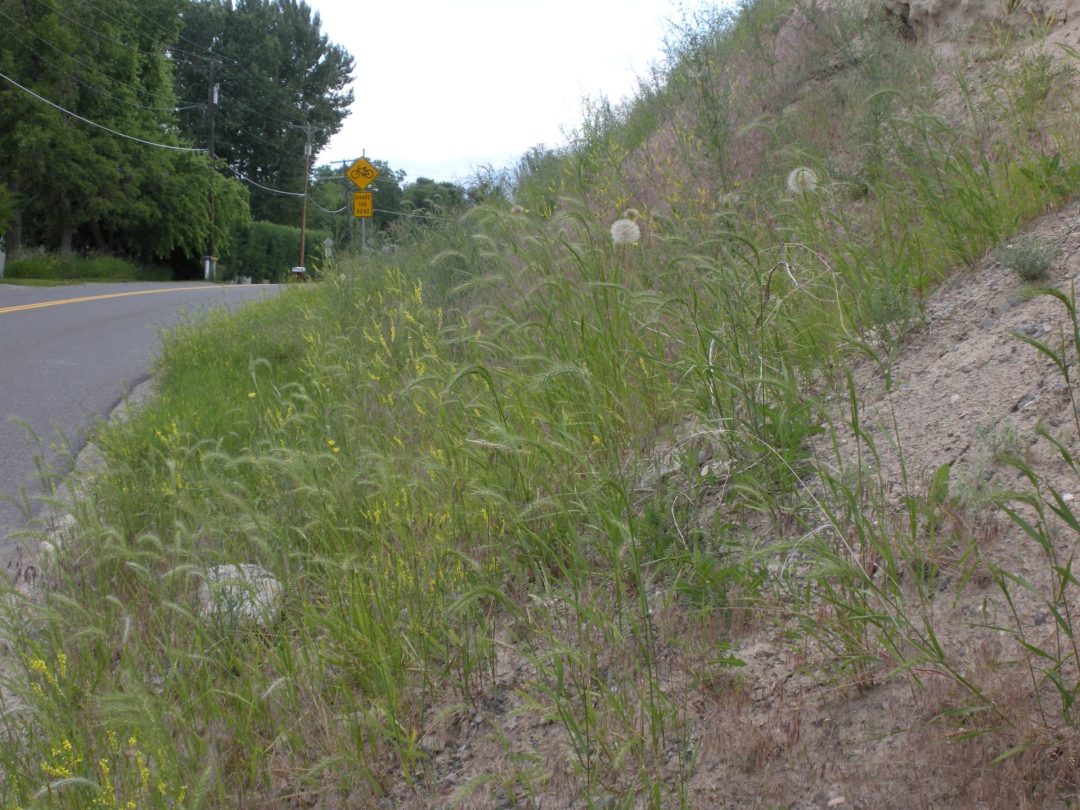
Height: 60–150 cm
Spread: 60–90 cm
Hardiness zone: 3–8
Exposure: full sun
Adapting to a wide range of soils and found all across the country with the exception of British Columbia, Canada Wild Rye attracts birds and produces an attractive flower for cutting or drying. Greenish flowers appear in terminal, arching, bristly spikes which, when mature, gracefully sway in the wind on stiff stems rising well above the foliage. Foliage and spikes turn tan in fall and provide visual interest throughout the winter. Self-seeding in optimal growing conditions, this plant tolerates drought, salt, and compaction. Its fibrous root system works well to control erosion. Canada Wild Rye provides shelter, food and forage for wildlife, and good nesting, brood, winter and escape cover for birds.
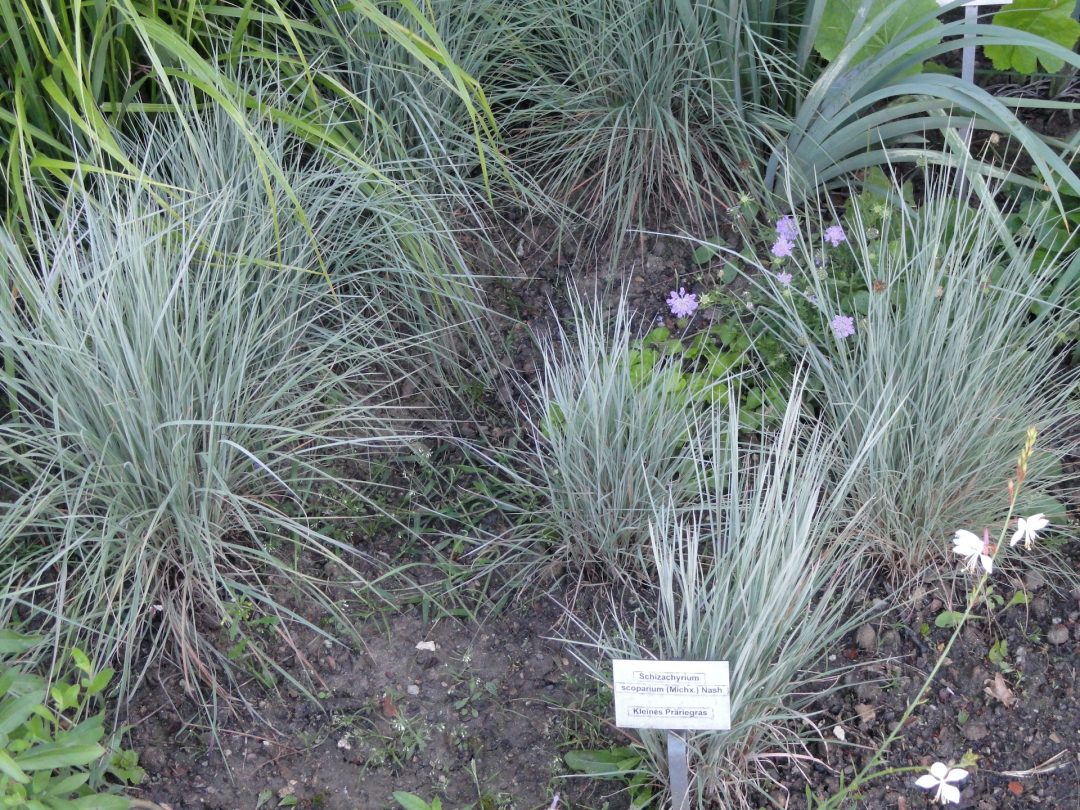
Little Bluestem (Schizachyrium scoparium)
Height: 45–120 cm
Spread: 45–60 cm
Hardiness zone: 3–9
Exposure: full sun
Water: dry to medium
Little Bluestem is tolerant of drought and humidity, dry soil and erosion, and it grows easily in average, well-drained soil. This plant is native to prairies, fields, clearings, hills, limestone glades, roadsides, waste areas and open woods across most of southern Canada. It features upright clumps of slender green leaves tinged blue at the base. Flowers appear in 8 cm long racemes on branched stems rising above the foliage and are followed by showy clusters of fluffy, silvery-white seed heads that often persist into winter. In the fall, Little Bluestem is known for its bronze-orange fall foliage color. It is the larval host for several species of skippers and one species of butterfly.
More recommendations for grassy native groundcovers
Wood’s sedge (Carex woodii); Upright sedge (Carex stricta); Hayden’s sedge (Carex haydenii);
Bristle-Leaved Sedge (Carex eburnea); Bottlebrush Grass (Elymus hystrix); Sweetgrass (Hierochloe odorata); Switchgrass (Panicum virgatum); Sand Dropseed (Sporobolus cryptandrus)
Photo Credits:
Carex pensylvanica: Krzysztof Ziarnek, Kenraiz, CC BY-SA 4.0 <https://creativecommons.org/licenses/by-sa/4.0>, via Wikimedia Commons
Elymus canadensis: Matt Lavin from Bozeman, Montana, USA, CC BY-SA 2.0
Schizachyrium scoparium: Daderot, CC0, via Wikimedia Commons