 Simcoe County Master Gardeners
Grow Natives!
PLANT PROFILE
COMMON NAME: American Elderberry
BINOMIAL: Sambucus canadensis
| Family | Adoxaceae |
| Cdn Native Range | all of Canada |
| Natural habitat | moist meadows, wetlands, stream banks, fields and open areas, thickets |
| Type | woody deciduous shrub |
| Features | tiny white flowers in large, flattened umbel-like cymes (to 25 cm/10” across), edible black berries late summer; good for pies/jam |
| Growth habit | upright, multi-stemmed, suckering shrub |
| Mature height | up to 3.75 m (12 feet) |
| Mature spread | up to 3 m (9–10 feet) |
| Life span | fast-growing shrub lives up to 60 years |
| Cdn Hardiness Zone | 3–9 |
| Growing conditions | full sun/part sun |
| Soil conditions | wet soil preferred, can tolerate most soil conditions |
| Watering needs | not necessary |
| Fertilizer needs | little or no supplemental fertilizer |
| Tolerance | flooding, erosion, clay soil, compacted soil |
| Maintenance rank | medium |
| Maintenance needs | prune back early spring to encourage strong shoots, prune out suckers to avoid colonizing |
| Bloom | profuse, small, white, lemon-scented blooms that form large, flat cymes June to July |
| Fruit | late summer berries are edible when cooked |
| Pollinator support | larval host for zebra caterpillar, four-barred grey, cecropia, and dozens of other moths; pollen feeds bees, flies, and beetles |
| Environmental support | significant food source for birds and mammals; dead stems provide habitat for cavity-nesting bees; erosion protection |
| Garden Use | back of informal flower bed/border, naturalized areas, slopes |
| Risks & Cautions | do not eat berries raw, no serious pests or diseases; will spread through suckering; branches susceptible to damage with high winds, ice and snow |
References: Ontario Trees and Shrubs, www.ontariotrees.com; In Our Nature, https://inournature.ca; Missouri Botanical Garden Plant Finder, missouribotanicalgarden.org/plantfindersearch.aspx
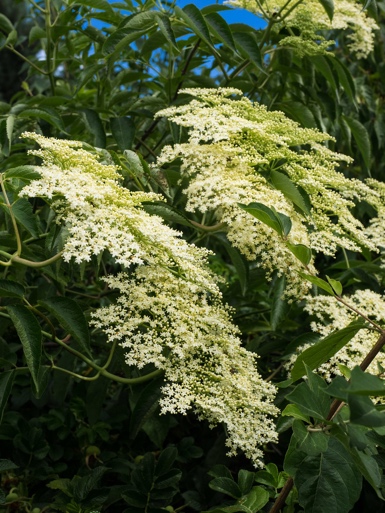
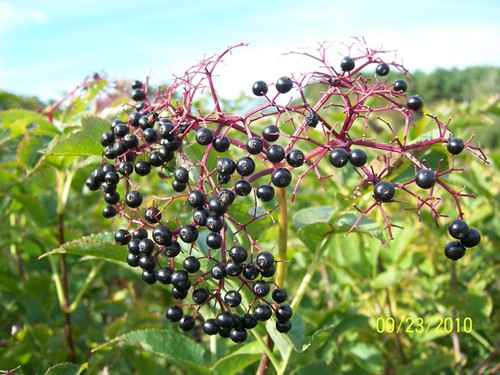
Photo Credits:
Common Black Elderberry (Sambucus canadensis)
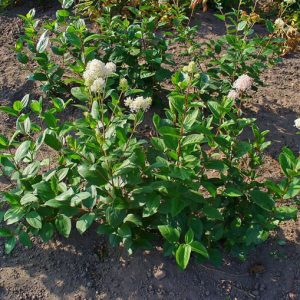
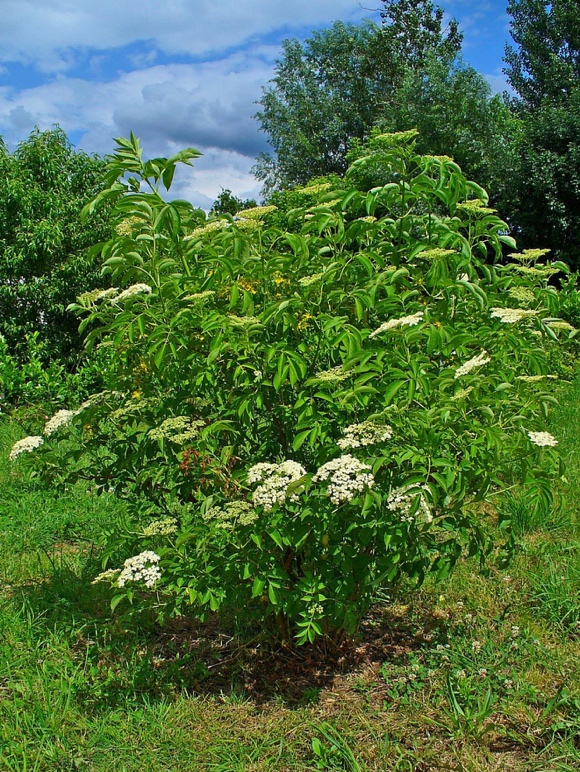
Common Elderberry – shrub (credit: unknown, CC BY 2.0)
Common Elderberry – fruit (credit: cobaltfish CC BY-SA 2.0)