 Simcoe County Master Gardeners
Grow Natives!
PLANT PROFILE
COMMON NAME: pale purple coneflower
BINOMIAL: Echinacea pallida
| Family | Asteraceae |
| Cdn Native Range | Southwestern Ontario |
| Natural habitat | tallgrass prairie, open meadows, roadsides |
| Type | herbaceous perennial |
| Features | showy flower, fragrant, excellent cut and/or dried flower |
| Growth habit | upright, clump forming; open, airy habit; deep taproot |
| Mature height | 60–100 cm (24–40 inches) |
| Mature spread | 30–45 cm (12–18 inches) |
| Life span | long lived perennial (10+ years in suitable conditions) |
| Cdn Hardiness Zone | 3–7 |
| Growing conditions | full sun to part shade, performs best in full sun |
| Soil conditions | dry to medium, well-drained soils; sand, loam, gravel; tolerates poor, low fertility soils; dislikes wet, heavy clay |
| Watering needs | extremely drought tolerant once established; water regularly during first growing season; minimal supplemental water thereafter except in prolonged drought |
| Fertilizer needs | not required; avoid rich soils; top dress with light compost if needed |
| Tolerance | drought, heat, poor soil; some salt tolerance; moderate deer resistance (not deer-proof) |
| Maintenance rank | low |
| Maintenance needs | deadhead to prolong bloom (optional); leave seed heads for winter interest and bird food; cut back in early spring; does not require staking; avoid overwatering |
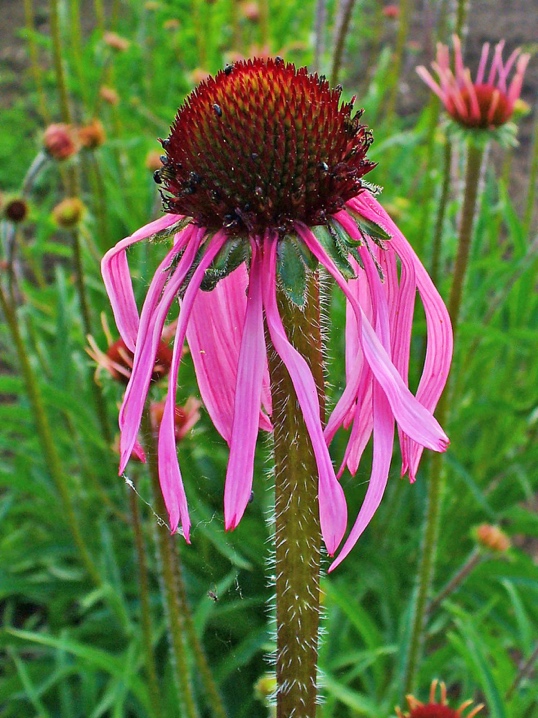
| Bloom | pale purple daisy-like flowers with drooping, pinkish purple petals; coppery orange centre cones; blooms June–July with sporadic blooms into fall |
| Fruit | dry seed; not fleshy/edible; seed heads persist into winter |
| Pollinator support | excellent nectar and pollen source for native bees and butterflies; larval host for some moth species; seeds feed native songbirds |
| Environmental support | supports native pollinators; bird food source; contributes to prairie biodiversity |
| Garden Use | prairie/meadow plantings; pollinator gardens; naturalized areas; drought-tolerant borders; restoration plantings; back or middle of sunny perennial border; suitable for slopes and well-drained sites |
| Risks & Cautions | does not tolerate wet soils; may develop root rot in poorly drained conditions; no significant toxicity concerns |
References: Forest Gene Conservation Assn, Species Information Table; In Our Nature; Missouri Botanical Garden Plant Finder; Native Plant Connection
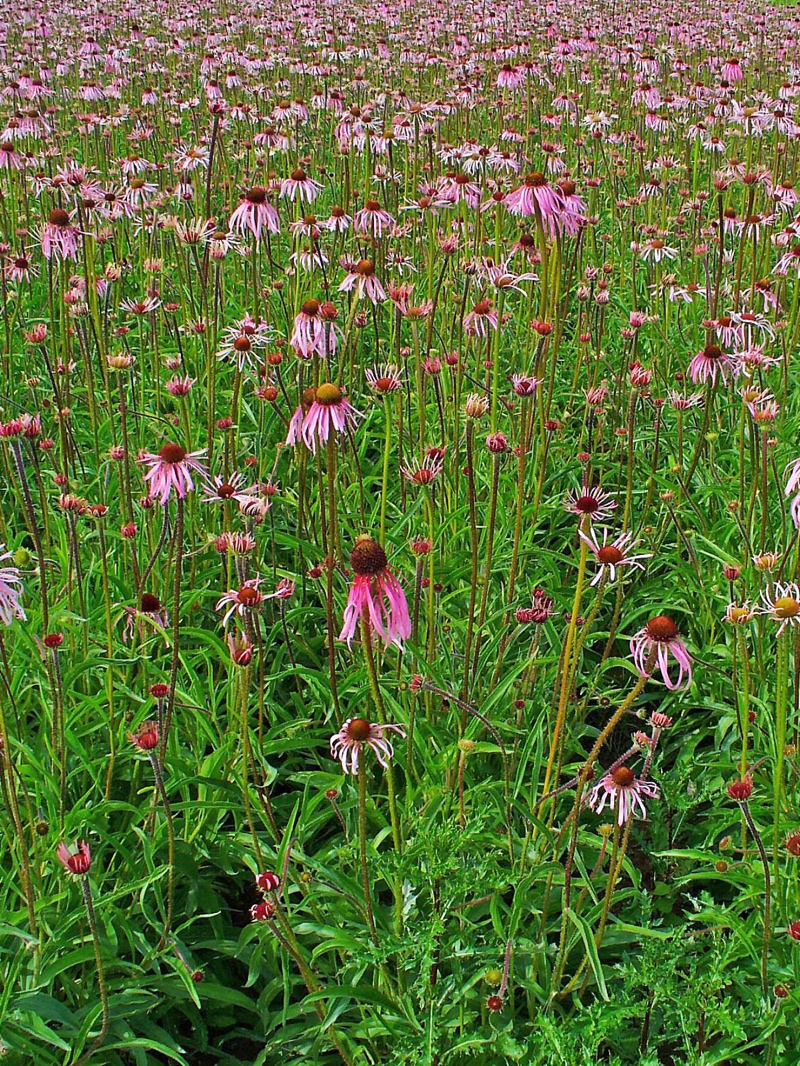
Photo Credits:
Echinacea pallida (credit: H. Zell, via Wikimedia commons)
Echinacea pallida mass planting (credit: H. Zell, via Wikimedia commons)